Well, aside from a few plot holes and the lack of any actual war, I really enjoyed watching this third Ape movie. I found it to be very atmospheric with good performances by the cast and the CGI effects was spot on. The pacing was a little slow but I had no problem with it, since it moved along and I especially liked the way the ape conversations was done with the time spent with all the eye shots. Overall a good movie for me, it’s just sad how it ends it though!
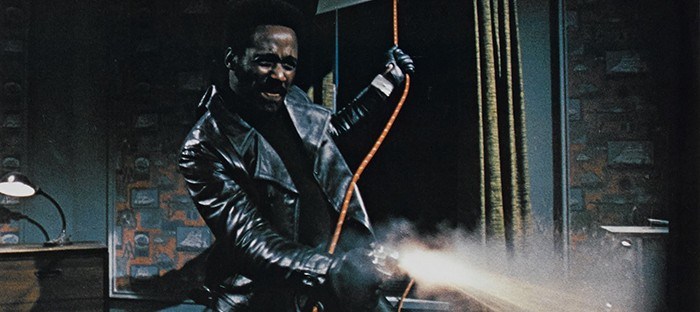
The movie starring Samuel L. Jackson was on TV but I decided to go for the original, that had been on my to watch pile for quite a while. What shall I say? It’s still an enjoyable and that oscar-winning score by Isaac Hayes will stay with you for days, but it the type of trend-setting movie that must have looked far more impressive back then than it does today. It’s a detective story by the numbers, only with a black instead of of a white detective. Richard Roundtree is a cool hero but the action moments are as standard as the detective story.
I planned to watch the trilogy (not sure I ever saw the sequels), so I wonder what impression Big Score and In Africa will make.
I’d agree with your assessment on this one - it hasn’t really aged too well. Watched about the first half recently, and found it rather routine as a detective story. I suppose the audience of the time were supposed to be dazzled by the main character, but since almost every cop/detective movie after this had a main character who was anti ‘the system’, the whole thing comes off a little tiresome.
The sequel to the trend-setting Shaft, not really following the trend: John Shaft, a private eye in the line of Sam Spade and Philip Marlowe (a loner living in a small apartment, waiting for the phone to ring), has become a popular womanizer living in a luxury suite whose name is on everybody’s lips. In other words: Shaft is on his way to become the Afro-American answer to James Bond (long before Idris Elba was considered for the role). Parks returned as director but because Isaac Hayes was unavailable (or not interested) he also did the score. And no, Parks was no Hayes and his score is not Oscar friendly.
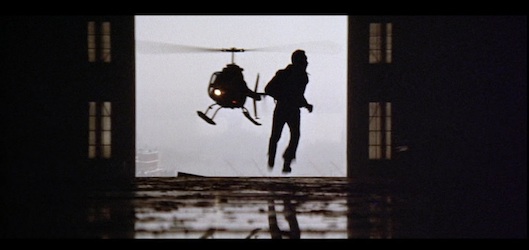
The story-telling is as lacklustre as in the first movie: the owner of a funeral parlor is killed by his partner who wants to pay off his gambling debts, but the money he planned to steal is missing. The rest of the movie has everybody, good, bad or ugly, running after the lost treasure. And no, Parks was no Leone either. Luckily there’s enough violent action and leering sex to keep most viewers interested and that finale, a protracted chase sequence involving a car, a speedboat and a helicopter, is quite exciting (if not very believable, they could’ve shot Shaft at least a dozen times). Watched as a brainless actioneer, this is actually not a bad movie. And Roundtree is still a likable hero.
The third and final installment in the franchise starring Richard Roundtree as private eye John Shaft from New York City. The brotherman is hired by an Ethiopean emir and sent to the motherland to infiltrate a 20th Century slavery ring smuggling cheap African laborers into Europe.
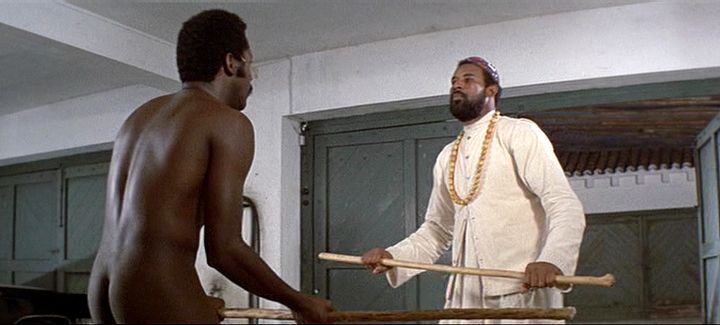
The premise may suggest that the movie has anything to say about racial issues, but it’s a rather straightforward action adventure (and some of the raunchy jokes are actually dangerously close to being sexist and racist). The film plays along the lines of a globe-trotting James Bond adventure, albeit with some heavy doses of violence and nudity added. We get arm breaking, neck breaking and lots of man-to-man combat. Shaft himself has a stick fight butt naked. Talk about sexual metaphors!
Subtlety may not be among the movie’s selling points, but Roundtree has grown nicely into the role and director Guillermin keeps up the pace so we don’t have to worry about the paper thin script. Spaghetti western fans will want to know that the emir’s daughter is played by Vonetta McGee, the black widow from Sergio Corbucci’s The Great Silence. She looks great and so does Serbian actress Neda Arnerić as the criminal mastermind’s oversexed mistress who has an eye for any man, including John Shaft, in particular one specific body part (you know what they say about black men). Aldo Sambrell as a cameo as a hitman.
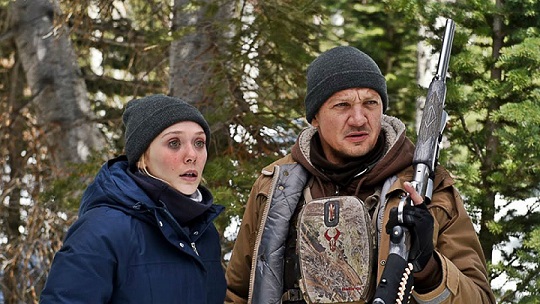
"A veteran tracker with the Fish and Wildlife Service helps to investigate the murder of a young Native American woman, and uses the case as a means of seeking redemption for an earlier act of irresponsibility which ended in tragedy. "
Watched this little known film a while ago and it didn’t disappoint. I was expecting the worst, but this turned out to be a surprisingly good film. Good story, decent acting and the snow scenery is outstanding. For me this film was raw and real as it gets, too bad it’s not as recognized as it should be. 9/10
1969; Impasse, with Burt Reynolds at his early best. That’s why it’s worth watching. He’s on the trail of lost gold in the Philippines, but it’s more of a situation where he’s on the trail of putting together a gang of misfits in Manila, to go after the gold. Lotsa thugs, women, Reynolds doing his own martial-arts stunts… and an exciting foot-chase through the slums.
The final shootout and jeep-chase were disappointing till I realized screenwriter. John Higgins was setting-up the end-scene… Can’t have a killer standing at the airport waving a mischievous ‘see you soon’ farewell to his girlfriend, with his hand cuffed-to a policeman, who’s also waving.
Over the last four weeks (and in addition to my October Halloween movies or Spagvember westerns):
Mascots (Guest, 2016) Best in Show (Guest, 2000) Being There (Ashby, 1979) Badlands (Malick, 1973) The Last Temptation of Christ (Scorsese, 1988) Thor: Ragnarok (Waititi, 2017) Batman vs. Two-Face (Morales, 2017) Louis Theroux: My Scientology Movie (Dower, 2015) Sorcerer (Friedkin, 1977) Electra Glide in Blue (Guercio, 1973) Justice League: The New Frontier (Bullock, 2008) The King of Pigs (Yeon, 2011) Life (Espinosa, 2017) Kick-Ass 2 (Wadlow, 2013) Your Name. (Shinkai, 2016)
O Matador (The Killer) (2017)
Netflix production set in early 20th c. Brazil with ruthless bounty killers, cangaceiros and gorgeous landscapes. The story isn’t much out of the ordinary, and the kind of directing is very Brazilian, but the flick is full of spaghetti western stylistic devices and interesting moments. Not a great movie, but hey, how many contemporary Brazilian adventure flicks do we get to see…
Over the last couple of weeks (and in addition to my Spagvember pics):
Repo Man (Cox, 1984) Macho Man: The Randy Savage Story (2014) Spider-Man: Homecoming (Watts, 2017) The Grey (Carnahan, 2011) It’s Not Yet Dark (Fenton, 2016) J.D.'s Revenge (Marks, 1976) To Live and Die in L.A. (Friedkin, 1985) The Villainess (Jung, 2017) Justice League (Snyder, 2017) The Wages of Fear (Clouzot, 1953) The Incredible Shrinking Man (Arnold, 1957)
The T-Bird Gang, 1959… I never thought Ed Nelson, of all people, could absolutely dominate a film like a classic cult-actor, but he does here. -As Alex Hendricks; head of a citywide theft-ring, who drives a white Thunderbird-convertible. The gang kills the father of a 20-year-old drifter with police-connections, who goes undercover to… you know the usual revenge-machinations.
Oddly, but realistic to its crime-theme, my biggest criticism is that all the outside-scenes happen at night. We don’t see the full visual-‘personalities’ of the vehicles. My biggest rave other than Nelson, is the unbelievably sizzling jazz-score by Shelly Manne . Makes the movie a solid 7-out-of-10.
Evil Dead II. I finally watched this one (for the first time, sue me) and I think it was atrocious. The first was innovative, campy fun, a landmark classic. This one, not so much.
It’s not a movie which has aged particularly well but, in its day, it was thought of here in the UK very fondly and as something of a quantum leap forward for the property. “Innovative, campy fun, a landmark classic” is exactly how I’d describe Evil Dead II (it’s certainly how I’d have described it back when I saw it in approx. 1988 or 1989 as a teenager); I wouldn’t have described The Evil Dead that way at all though, probably because of its front-and-center position amongst the “Video Nasties” furore along with Cannibal Holocaust, I Spit on Your Grave and The Texas Chain Saw Massacre (which wasn’t actually one of the 72 “video nasties” at all, having been banned many years previously). I mean it is campy fun now - it’s rather quaint, really - but back in the eighties I thought the first picture was fucking terrifying (the strange claymation effects towards the end notwithstanding). Ultimately I always preferred the more visceral first picture but that second movie was a bit of a must-see at the time.
The real let-down (for me) was the third movie which had a lot of promise but became preoccupied with throwing scores of Harryhausen-style skeletons up on the screen.
Matango: Attack of the Mushroom People (Honda 1963),
a film I became aware of only recently, in London, stumbling on the book Horrors From Haunted Seas by William Hope Hodgson, containing the short story The Voice in the Night, upon which the film is loosely based. Now straight to
The Wages of Fear (Clouzot, 1953) One-Eyed Jacks (Brando, 1961) Serpico (Lumet, 1973) Solaris (Tarkovsky, 1972) The Dark Tower (Arcel, 2017) Bad Lieutenant - Port of Call: New Orleans (Herzog, 2009) Antichrist (von Trier, 2009) Bird (Eastwood, 1988) A Bittersweet Life (Kim, 2005) Don’t Look Now (Roeg, 1973) Dr. Strangelove or: How I Learned to Stop Worrying and Love the Bomb (Kubrick, 1964) Son of Rambow (Jennings, 2007)