Funnily enough, after being a lover of this film for almost 50 years, I’ve just discovered something new.
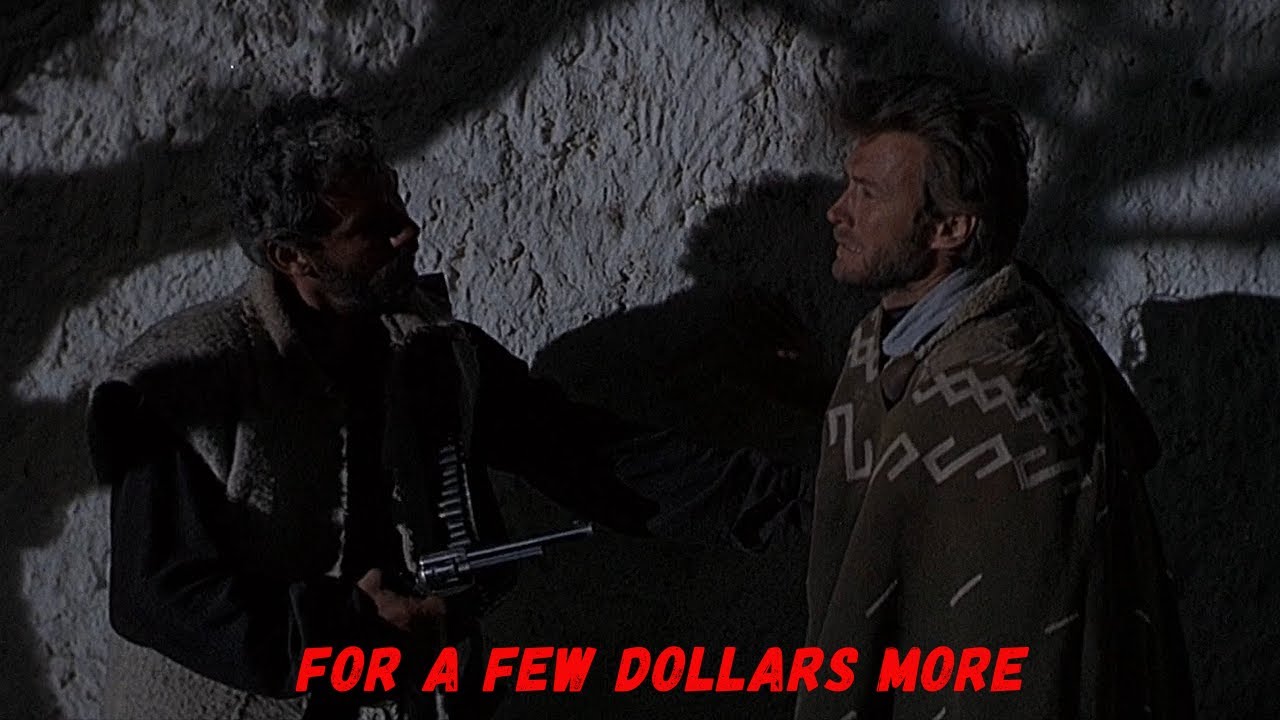
It features in the clip below…
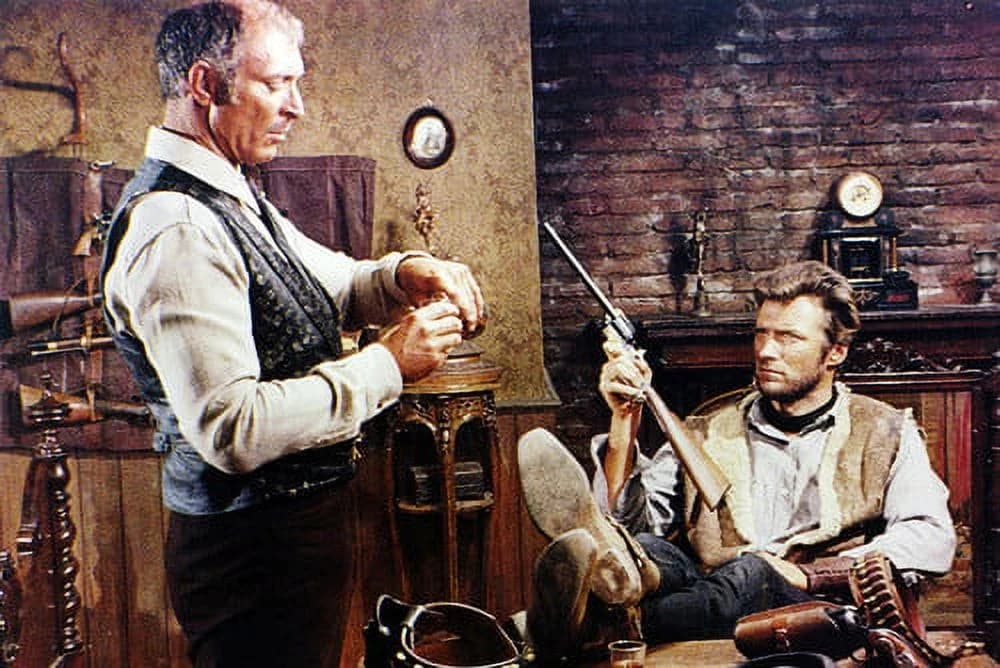
I have never noticed before, but what looks like a fire-place is not as it appears…
The actual log fire that is burning in the scene, is placed in front of the ‘hole’ in the wall. I always thought that that was an actual fireplace.
Not particularly important, or relevant…but it’s nice to think that i may have seen something new after so many viewings…
Apart from the forensic comparisons, this analysis also reassured me that I was right to think “I’m sure this didn’t begin the credits with A Film Produced By Alberto Grimaldi the first few times I saw it.”
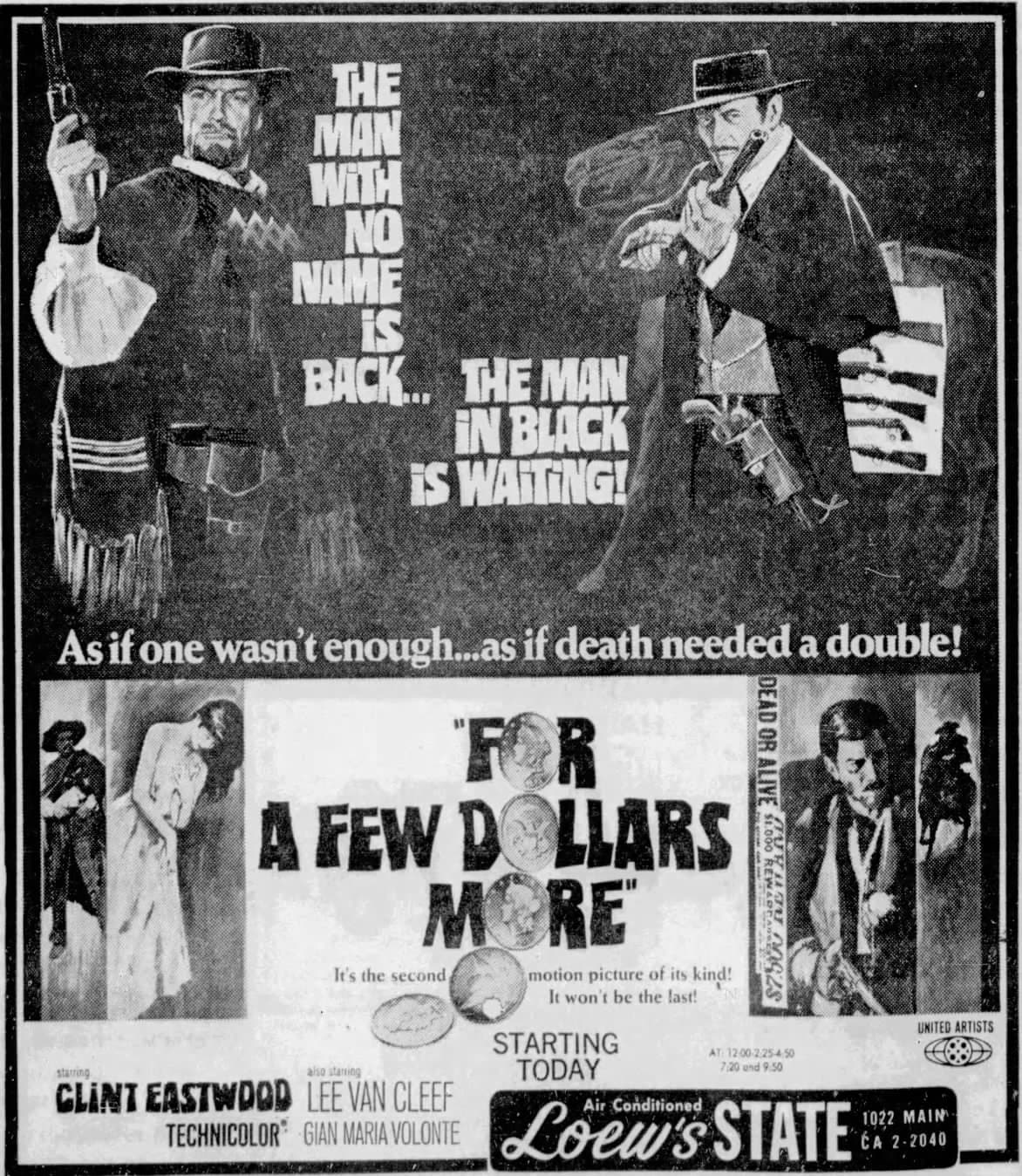
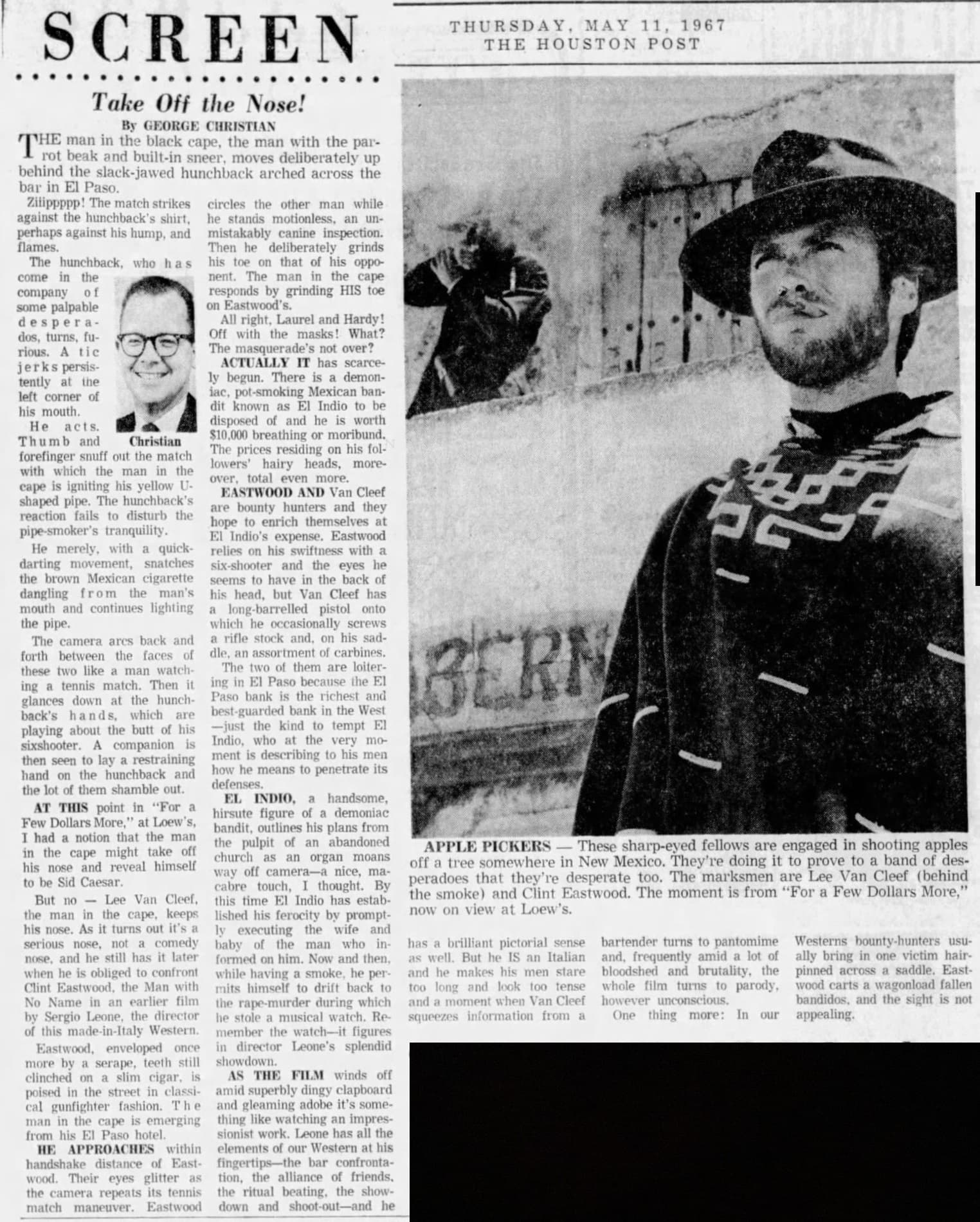
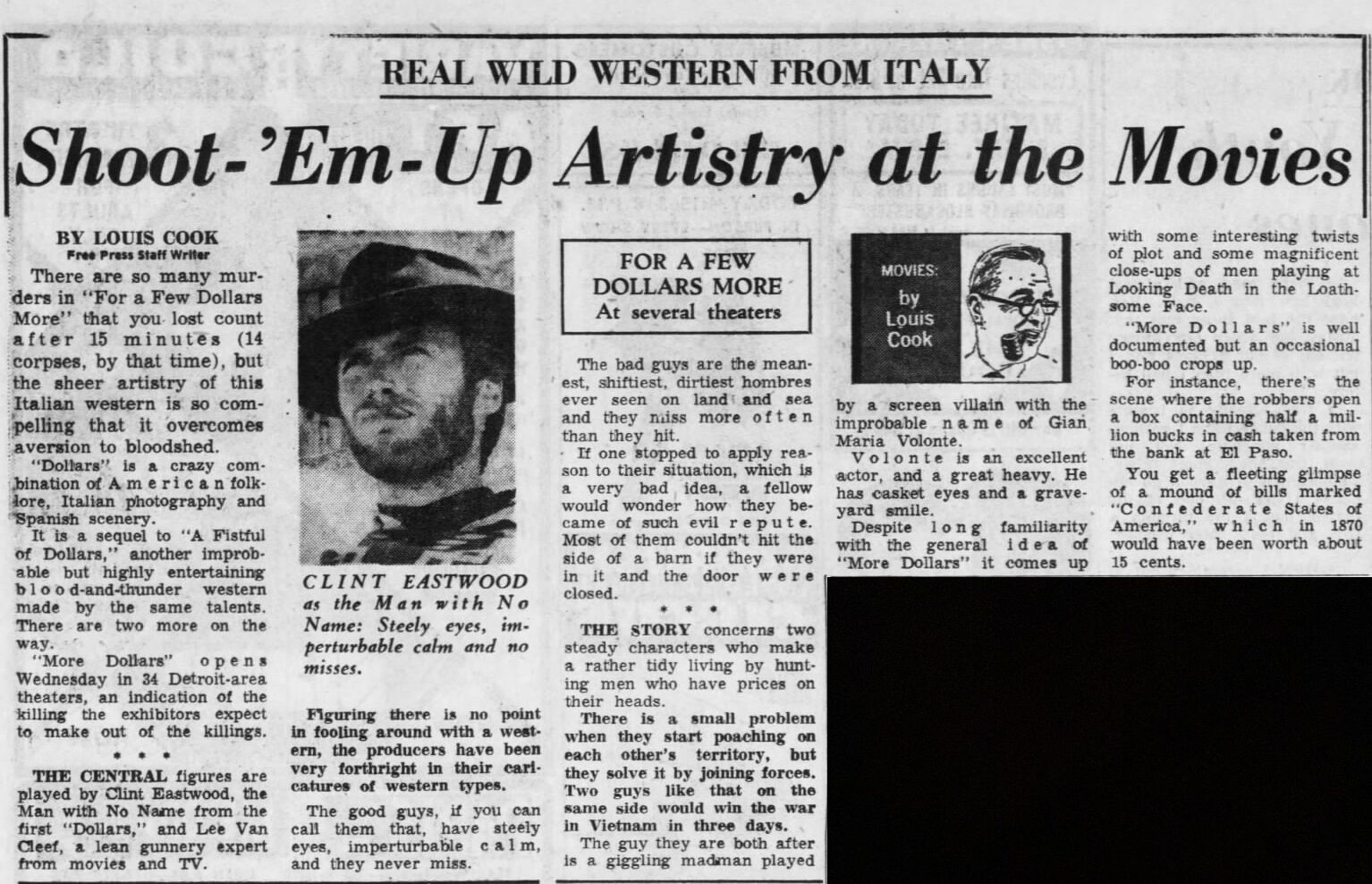
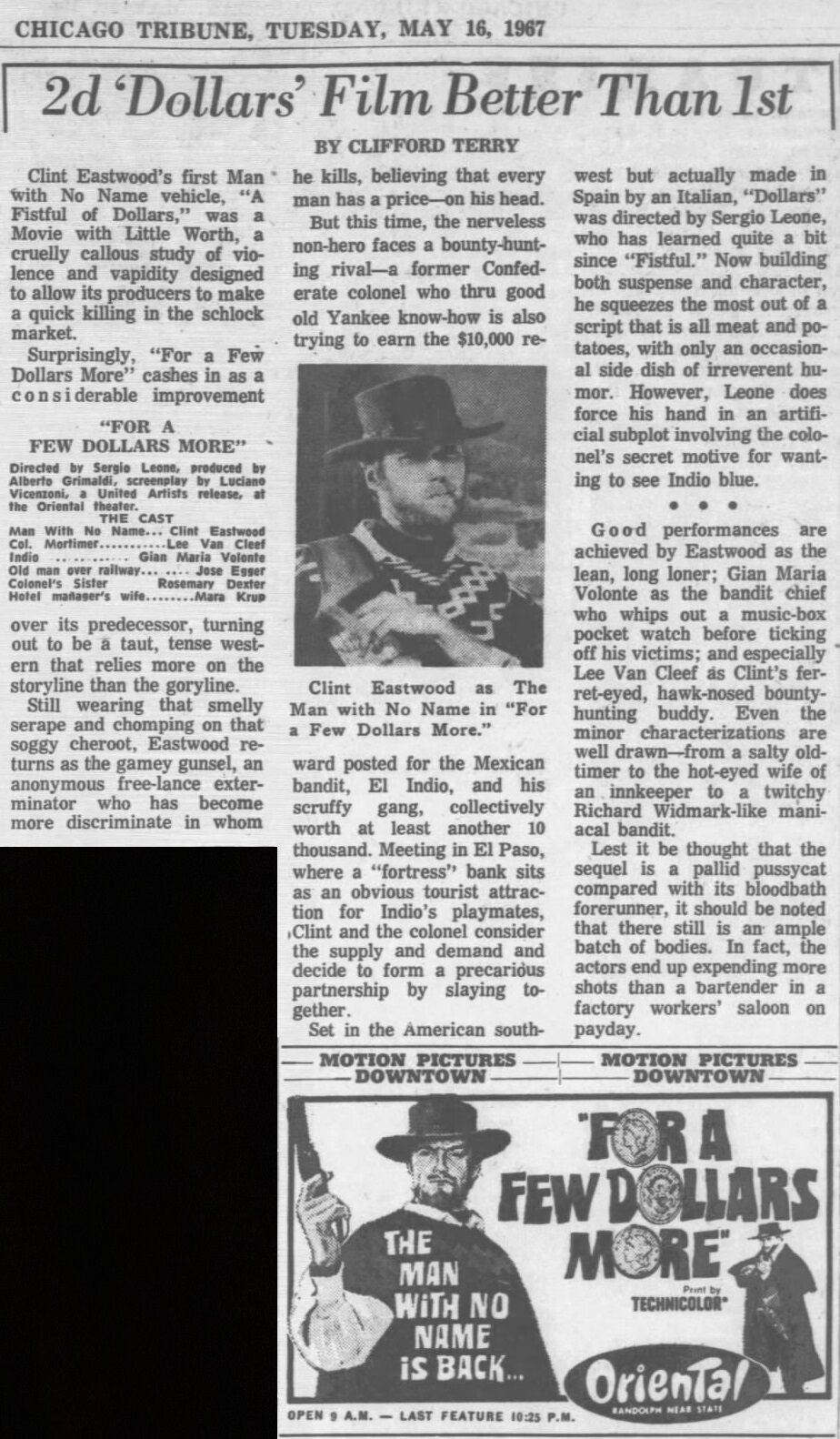
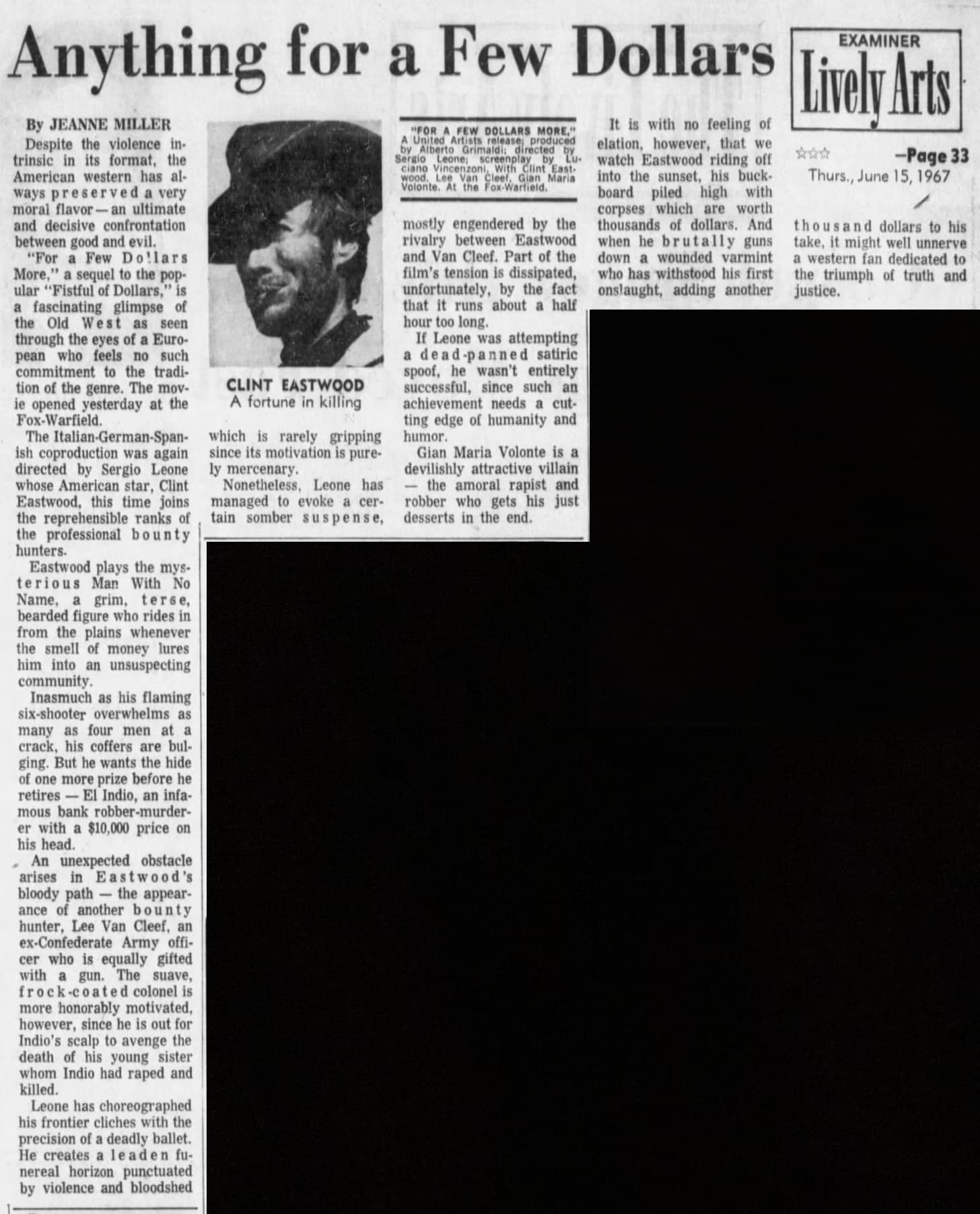
‘For a Few Dollars More’ opened in the U.S. in Washington D.C., Baltimore, Indianapolis and Houston on May 10 1967; followed by Chicago, Boston and Nashville, May 12 1967.
Sources below: (3) (Houston Post, May 10, 1967) (5) (Detroit Free Press, May 15, 1967) (8) (San Francisco Examiner, June 15, 1967)
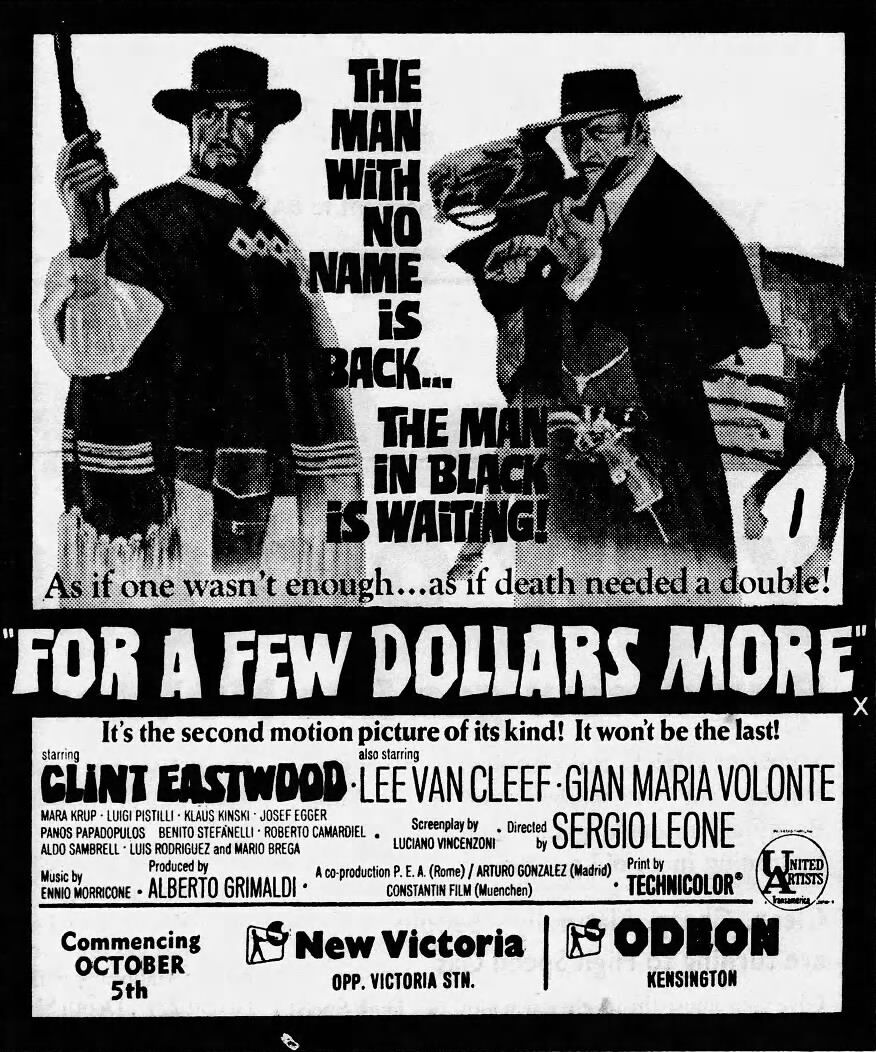
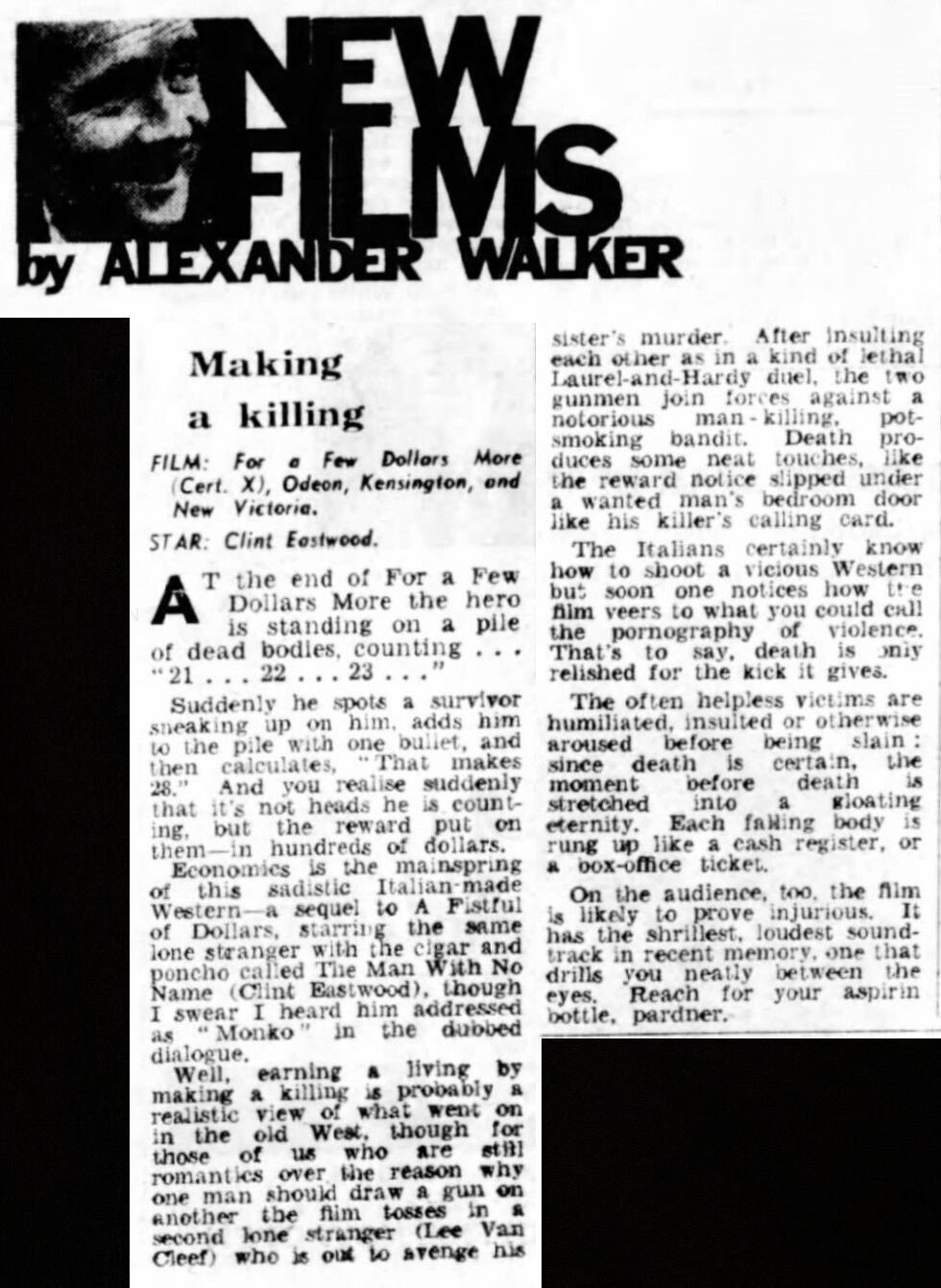
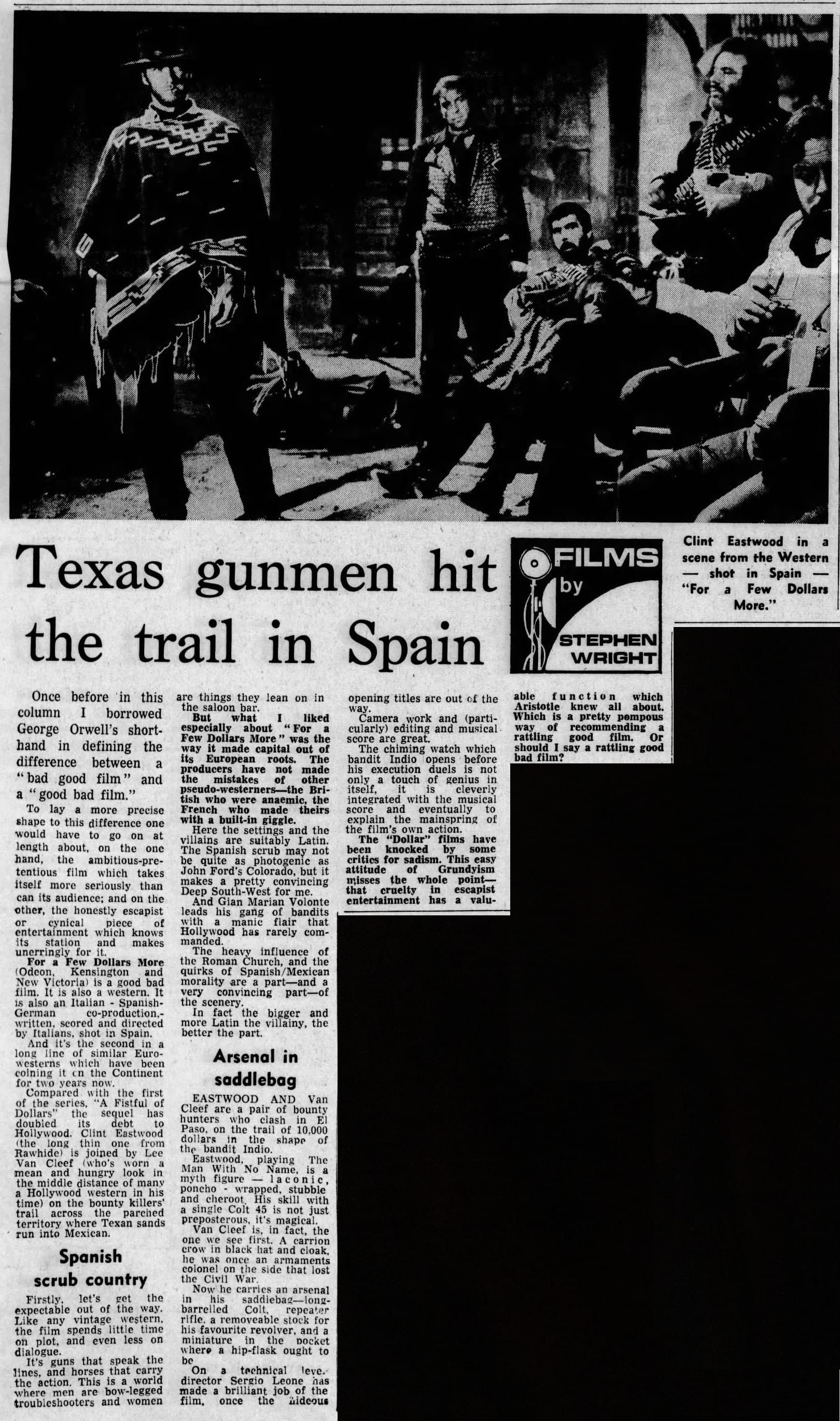
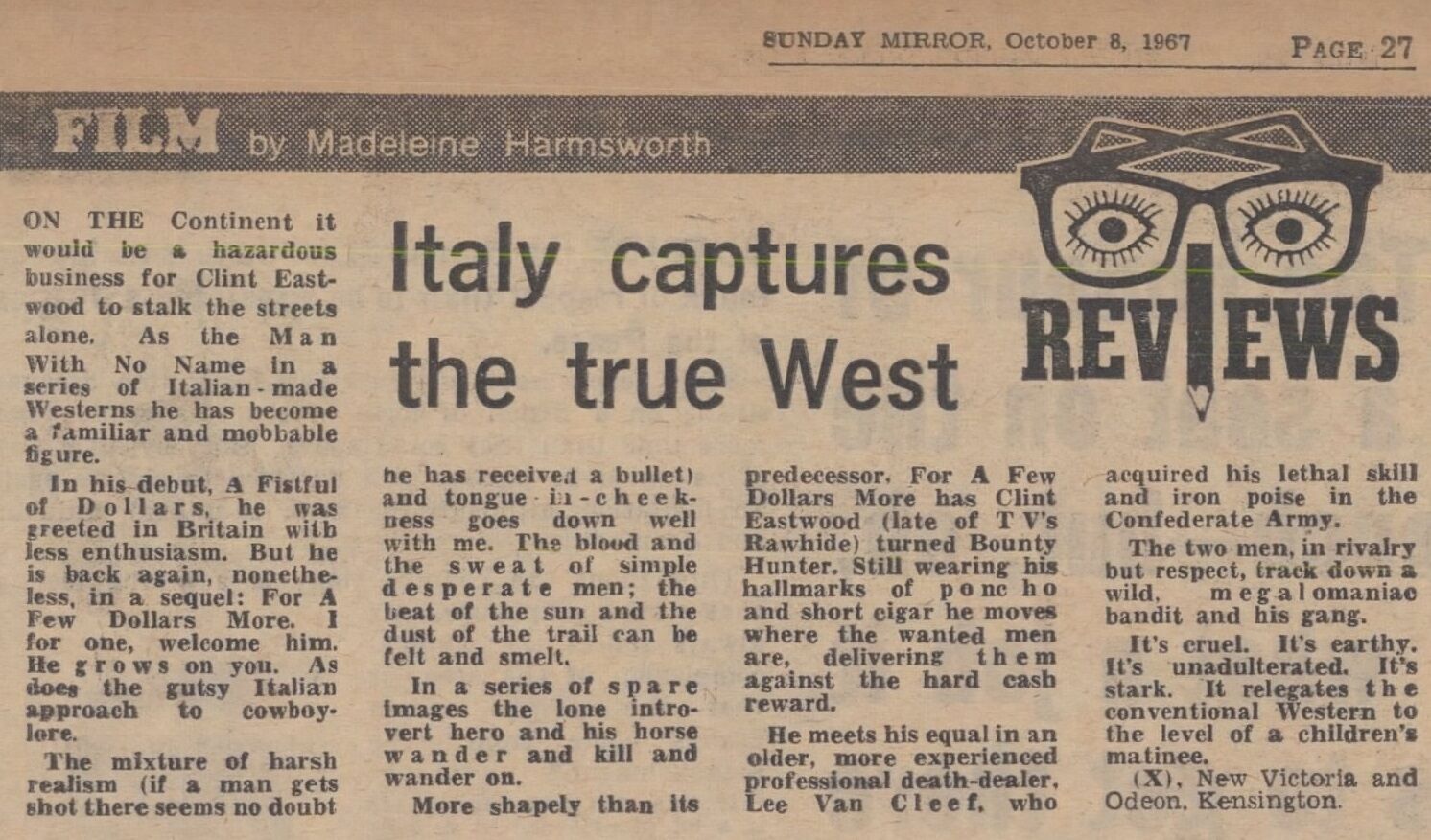
In the UK it first played at the New Victoria and Odeon Kensington on 5th October 1967. It made its TV debut on Tuesday 30th December 1975 (BBC1 21:30 - 23:35): “Once berated for its (very stylised) violence but now relatively tame in that respect.” (The Guardian, 30th December, 1975)
Sources below: (Kensington News and West London Times, 29th September, 1967) (Evening Standard, 5th October, 1967) (Liverpool Daily Post, 7th October, 1967)
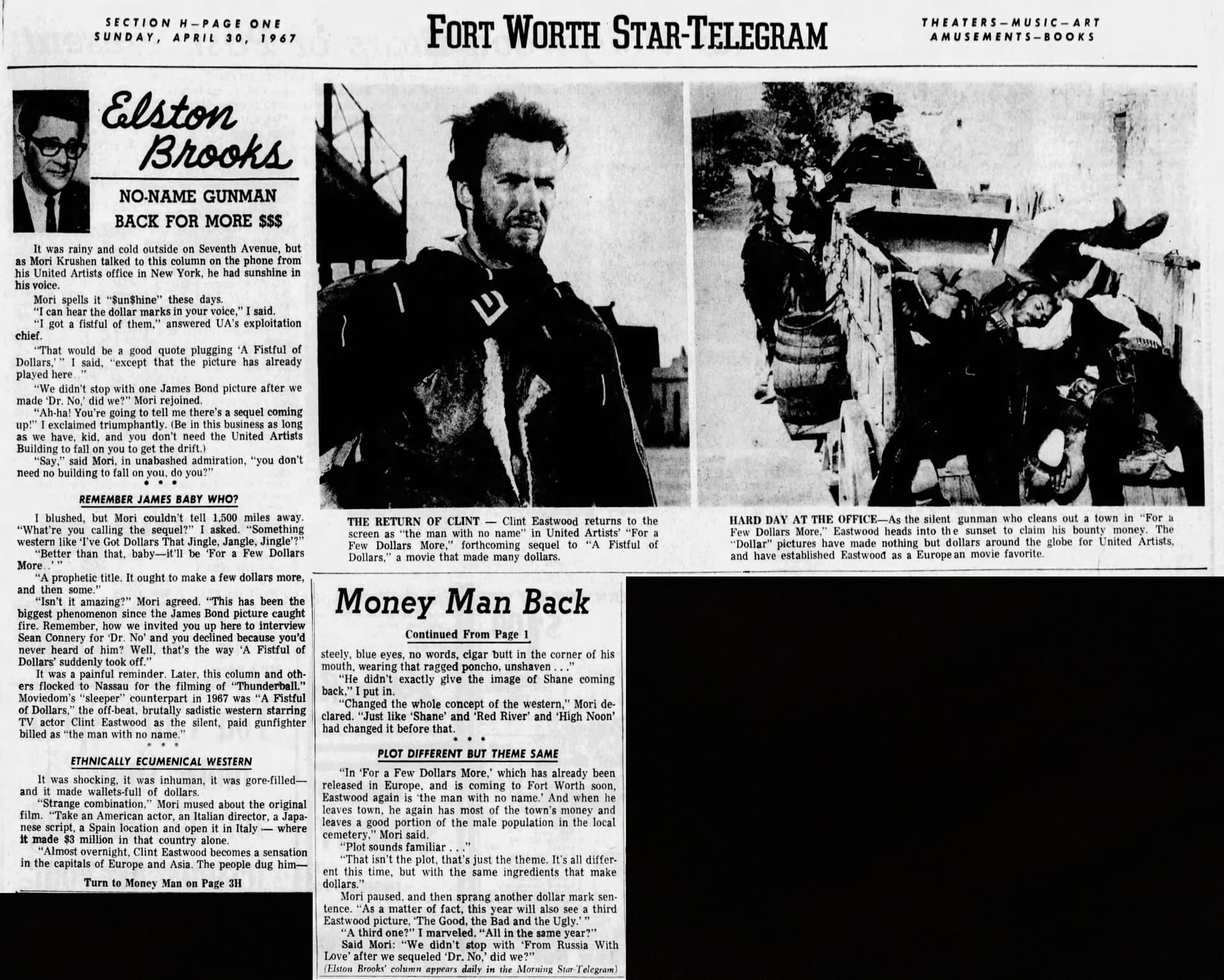
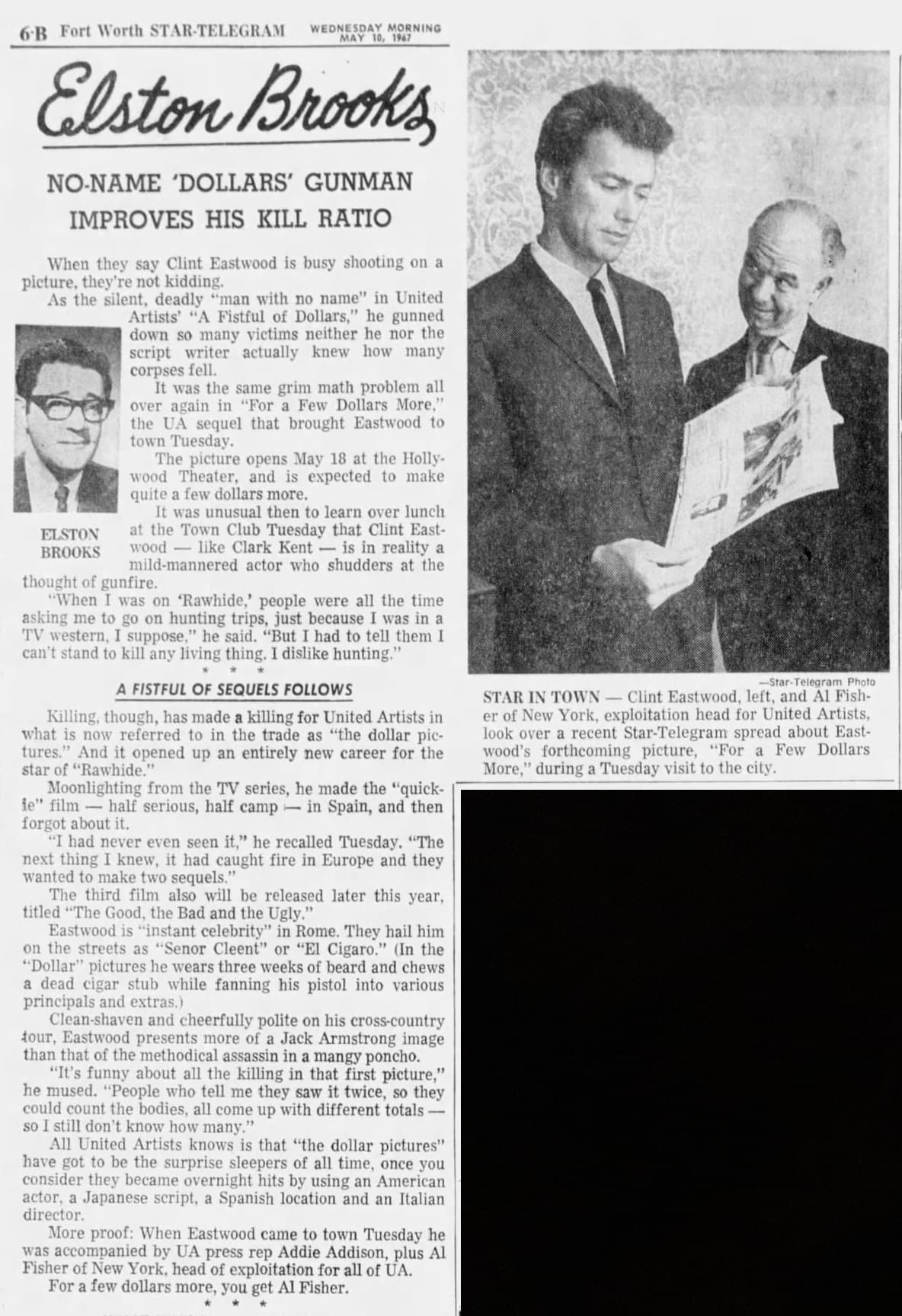
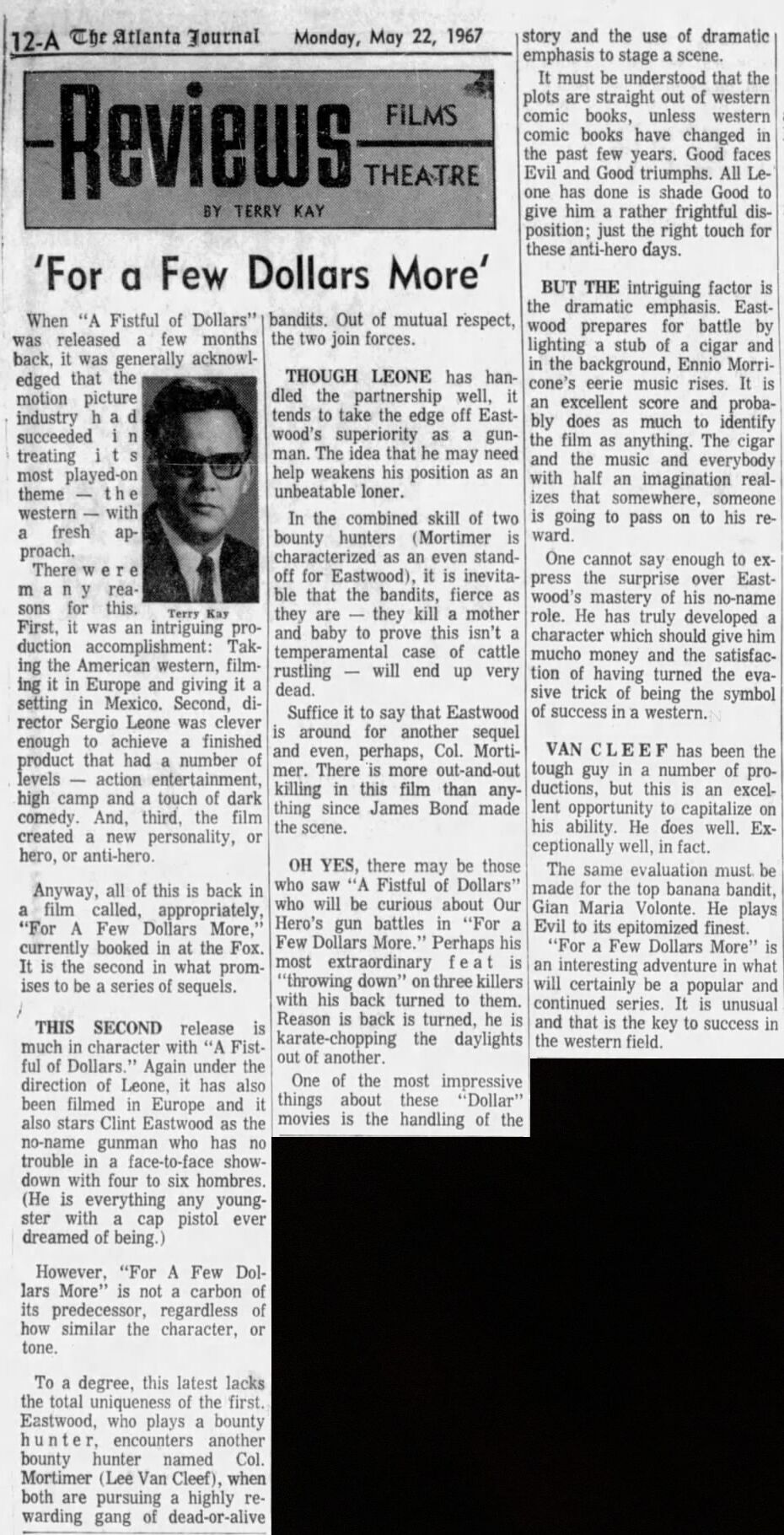
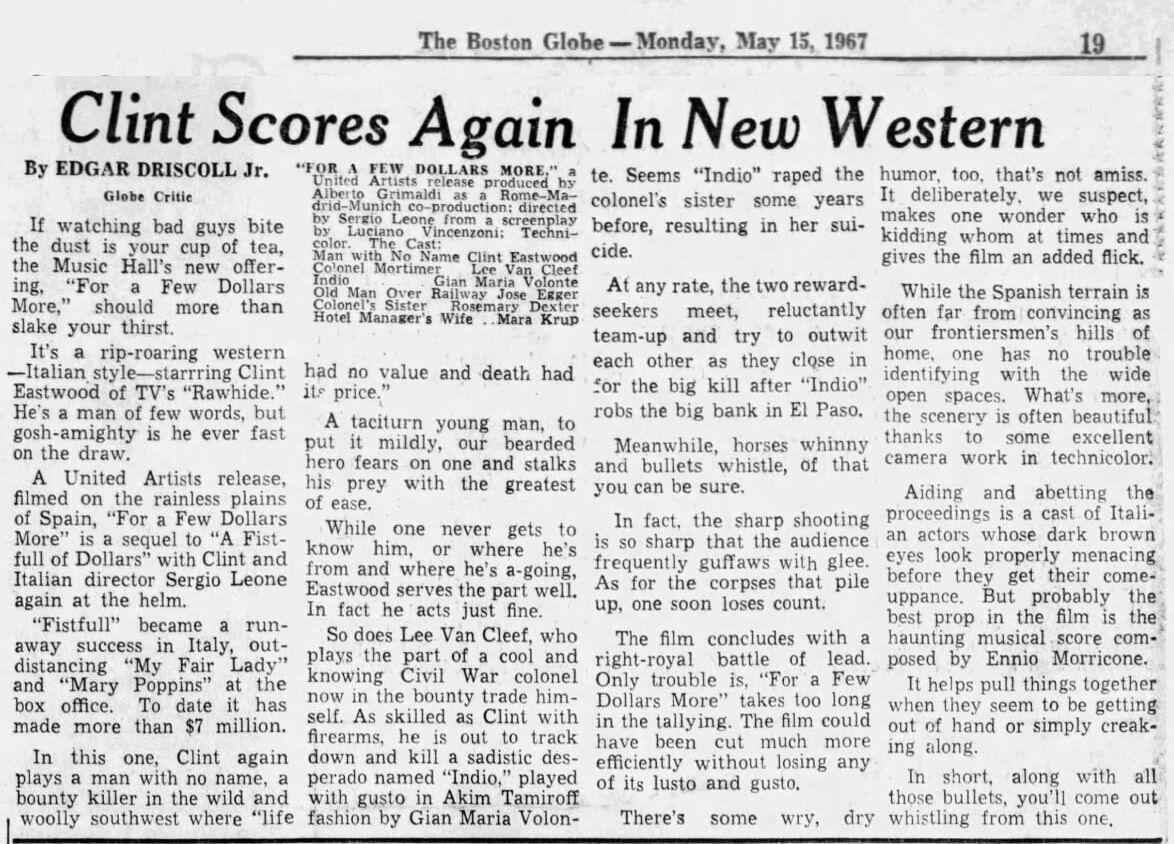
For years now, we have heard how film critics at the time either loved/liked/loathed the SWs. To have some of the actual newspaper reviews in front of us to scrutinise, is wonderful.
As someone else has already pointed out…the actual reviews varied for each SW, simply depending on the ‘class’ of publication the critics represented…
Looking back now, some of the critic reviews are laughably ignorant, un-informed, painfully biased, and probably on a mission to protect ‘an American Institution’…
As always, public opinion is what inevitably counted…and that is to be celebrated.
It just goes to show that although Film Critics may be eloquent (occasionally) in speech, it more often takes the average Joe/Manco/Blondie in the street to appreciate quality, invention, innovation, boldness, and bloody good entertainment…
“Let’s drink to these newspaper articles…with no spelling errors, of course…”
Thanks, @Toscano, it’s always difficult to decide which reviews to include but the above is a fair representation, albeit without posting the really ignorant/biased/silly ones. Here’s a few more…
Does that mean that you have many reviews for each film to go through?
How many for each film are available to you?
If so, then that is even more of a feat, in itself…
Only the Leone films and some of the other biggies. Many reviewers repeated the same things so it narrows it down somewhat. I always include reviews by Terry Kay (The Atlanta Journal), probably the most insightful and unbiased of the American critics from that era.
Really impressive research, keep up the good work. Even if you don’t see people clamoring for more, lurkers such as myself definitely appreciate the hard work put into it.
I remember when Roger Ebert did his list of great films he included The Good, The Bad and The Ugly even though he only gave it three stars originally. He said words to the effect of “…it was a four star film [he] could only give three stars, perhaps because it was a spaghetti western and so could not be art. But art it is.”
When I was at college in the 1970s my English teacher cited the Dollars films (which had just been on TV) as examples of trash. I was so passionate about them I spoke up to defend them as art.