Ah, that’s a shame. I recall liking the look of this when it came out, then I forgot all about it. I suppose the subsequent lack of buzz should’ve clued me in. Oh well.
THE SWEET SMELL OF SUCCESS
A magnificent late film noir, with superlative performances from Burt Lancaster and Tony Curtis. The film also boasts a memorable jazzy, yet mournful music score from the ever-dependable Elmer Bernstein.
I watched this on ‘Arrow’ bluray last night…excellent as always; but the pleasure contingent was raised significantly by the excellent picture quality and a host of engaging extras.
The dialogue has to be about as good as it gets with any film, with some of the most quoteable lines in film history:
“I’d hate to take a bite outta you…you’re a cookie full of arsenic!”
“People say I’m gifted, but I still can’t see round corners.”
THE SWEET SMELL OF SUCCESS…priceless!
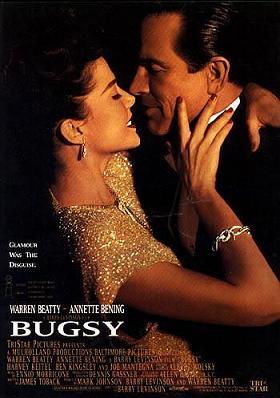
Bugsy 1991
Starring Warren Beaty, Annette Bening, Harvey Keitel, Ben Kingsley
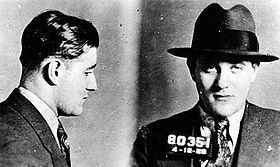
Real Bugsy Siegel
Oh boy! what an exellent movie. Wonderful performance by Warren Beaty. .
Wikipedia says :
“Bugsy never hesitated when danger threatened,” Stacher told Uri Dan. “While we tried to figure out what the best move was, Bugsy was already shooting. When it came to action there was no one better. I’ve never known a man who had more gut .”
In Hollywood, Siegel was welcomed in the highest circles and befriended stars.[9] He was known to associate with George Raft, Clark Gable, Gary Cooper and Cary Grant,[39][58] as well as studio executives Louis B. Mayer and Jack Warner.[59] Actress Jean Harlow was a friend of Siegel and godmother to his daughter Millicent. Siegel led an extravagant life. He bought real estate, and threw lavish parties at his Beverly Hills home.[9] He gained admiration from young celebrities, including Tony Curtis,[60] Phil Silvers, and Frank Sinatra.
 [size=12pt]THE BOYS FROM BRAZIL[/size] (1978, Franklin J. Schaffner)
I read the novel by Ira Levin more than thirty years ago; back then I thought it was a well-plotted, but ultimately rather far-fetched and unbelievable sf-thriller. Even today, when cloning has become a more common scientific practice, the plans to create a new super race by Nazi doctor Joseph Mengele (working from his base in South-America) sounds like too much hocus pocus and not enough sense. But okay, it’s science fiction, or rather: fantasy about science, it doesn’t have to be scientific or entirely credible. The question must be: have the film makers turned this fantasy into a thrilling movie?
Hard to say. It’s basically a two men show, Gregory Peck playing Mad Doctor Mengele (a character based on Mad Doctor Mengele), Laurence Olivier playing Good Doctor Lieberman (a character played on Good Nazi Hunter Simon Wiesenthal). The story moves at good pace and if you don’t know (or don’t remember) what it’s all about, it’ll sure keep you watching. But the two old men (both terrific actors by the way) overact to an almost ridiculous degree and we also get more phoney German accents than in an episode of Allo Allo (“I shell say dis only wence”). And what shall I say (only wence) about this grand guignol finale, including old age wrestling and attack dogs? Well, at least it’s an appropriate ending for the Mad Doctor.
Vigilante Force (1976) - Some good action, but such a bizarre random movie, not sure why the characters do the things they do… people get killed, and no one in town investigates or seems to care.
The Muthers (1976) - This didn’t need to be a women in prison movie… would rather see The Muthers travelling around as pirates like the opening of the film showed… good action movie at the start and last 20 minutes, but too much time spent in prison where nothing happens.
 [size=12pt]THE SILENCERS[/size] (1966, Phil Karlson)
The first of four Matt Helm screen adventures with Dean Martin as the Counter Intelligence Agent with a good eye for the ladies & the whiskey bottle. The character was created by pulp author Donald Hamilton as a man whose primary job was to eliminate enemy spies, not as a good-natured womanizer with a winning smile and and a warbling crooning voice. Originally the screen version was supposed to be a tough and ruthless fellow as well - the producers had thought of Gregory Peck for the Helm role - but when it didn’t seem to work (imagine Dino as a stone cold killer) director Karlson decided to turn the whole thing into a spoof.
Matt Helm is living a life of luxury but he’s called back to action by his boss MacDonald and his mistress Tina. An organization known as Big O threatens to provoke a nuclear conflict by dropping a missile on an atomic testing base in New Mexico. Made on a reduced budget, but featuring more lovely ladies than two Bond movies. The ladies more than make up for some hokey special effects and a rather ineffective Chinese villain played, of all people, by Victor Buono (was he supposed to be Fu Manchu’s Fat Cousin?). Stella Stevens is a delight as special agent Miss Hendrickx, who is so clumsy that she is a bigger threat to friends than to enemies.
“Ma’m, if you were an Indian, Custer would still be alive!”
A John Milius triple:
Milius (2013): a feature length documentary on Milius, featuring archive interviews with the man himself and an impressive assortment of talking heads, everyone from Spielberg and Lucas to Sylvester Stallone and George Hamilton. It’s a largely adulatory affair, preferring to print the legend of this self-described “zen anarchist” although there are some great stories along the way, even if I’m still convinced Milius’ true significance to film history is as a scriptwriter rather than as a director. For anyone interested in 1970s Hollywood, this is really essential.
Farewell to the King (1989): this is skated over in the documentary and it’s not surprising once you see the film. It recalls Apocalypse Now (1979) in story (which Milius scripted), only this time set in Borneo in the Second World War. It has a few impressive moments along the way and Dean Semler’s photography really captures the beauty of the island, shooting on location. However, the screenplay constantly reminds you how weak the film is when compared to Coppola’s take on the subject; Nick Nolte overacts and leaves nothing to the imagination in portraying the white king of the tribes, while Nigel Havers is far too earnest. Apparently Orion took the film away from Milius in editing, perhaps explaining the awkward voiceover and structural problems, but the individual weaknesses of the scenes would’ve likely remained even if Milius had kept control. Only James Fox as a British officer delivers a real performance.
The Wind and the Lion (1975): Milius however, shows what he’s capable of here in this roaring adventure film. A mixture of Lawrence of Arabia, Gunga Din, The Wild Bunch and perhaps half a dozen more, this is really a Western set in Morocco, with amusing cutaways to President Theodore Roosevelt (Brian Keith). A heavily fictionalized version of the Perdicaris incident[url]Ion Hanford Perdicaris - Wikipedia, it uses it as a springboard for an old-fashioned adventure film with expertly manned action scenes and butdone with great humour and even a hint of self-parody. Sean Connery as Raisuli the Magnificence is entirely improbable as an Arab, but the film’s emphasis on fantasy makes him work anyhow; Keith, on the other hand, is the ultimate embodiment of Teddy Roosevelt and offers an opportunity for Milius to expound on his ideas on the American character which become finally rather moving. It’s unapologetically imperialistic but then it’s unclear as to how seriously Milius ever thought you take his hawkish politics anyhow; at any rate Candice Bergen, as the kidnapped American, offers a strong central presence around which the whole movie revolves. Great score by Jerry Goldsmith and equally fine cinematography by Billy Williams all help to make this a movie easy to like when you don’t think about it too much.
Thought i had seen this, but must have mixed it up with another movie featuring Connery (not as an Arab, but in an adventure set in colonial times, probably India). Looks like a movie I would like, so I traced a copy and put it on my ‘to be watched soon’ list. Will be interesting to see a maginificent Arab with a Scottish accent. ‘Rasul’ means prophet, by the way. Since Mohammed is considered to be the last prophet in history, no muslim would ever call himself rasul (it would be blasphemy)
Edit:
I checked the original name of the person the character is based upon, it’s Mulai Ahmed Ar-Raisuni. So Rais + Uni, not rasul.
Rais means chief, head of state, emperor or something similar. Uni has become uli or oulli in some transcriptions.
Barefoot.
Man with a few problems in his life urgently requires a woman to attend his brothers wedding. He finds one in the shape of a mental patient, and this is the start of their wacky journey together. You know whats going most of the time, but their is some amusing moments to be had along the way.
@ Sherp:
I imagine you’re thinking of Huston’s The Man Who Would Be King (1975), which had Connery and Michael Caine in an another colonial adventure. I’m no expert on Islam so I was unaware of Rasul’s ‘true’ meaning. At any rate, I’m sure if Milius did know, he probably wouldn’t have cared (he was that kind of guy).
[quote=“John Welles, post:12231, topic:1923”]@ Sherp:
I imagine you’re thinking of Huston’s The Man Who Would Be King (1975), which had Connery and Michael Caine in an another colonial adventure. I’m no expert on Islam so I was unaware of Rasul’s ‘true’ meaning. At any rate, I’m sure if Milius did know, he probably wouldn’t have cared (he was that kind of guy).[/quote]
I already edited my post John. It’s not rasul but rais-uni, which has a completely different meaning
Even if based in real events, the film is basically a free dramatization of those events. US troops never really engage in combat, and Ahmed Er Raisuli was a barber leader that thought against both French and Spanish colonial troops in what’s was called the Rif War, also the person who was kidnaped wasn’t a woman but a shady Greek-American business man called Ion Perdicaris. Actually my favourite character in the film was Roosevelt, brilliantly played by Brian Keith. The Wind and the Lion is a good film, one in which Milius recognizes that David Lean was a major influence even some of Lawrence from Arabia sets were used.
Milius is a kind of a Renaissance man, one of a kind, in one way or another he has been in some of the most relevant films of the last decades, and really cared for Farewell to the King, yes Nolte overacts a bit, and there were some problems over edition, but it’s one of those films that anyone who has been in military life would like, like I did.
‘THE HOUSE BY THE CEMETERY’ (Directed by Lucio Fulci)
Having watched this for the first time at Christmas, I then re-visited it again last night.
This particular horror-fest contains great special effects…plenty of blood and splatter…the absolutely gorgeous Catriona (Katharine) MacColl in the lead role…and a veritable treasure-trove of extras on the ‘Arrow’ release bluray.
I went a bit ‘mad’ last year, and bought at least 25-30 ‘Arrow’ releases; of which ‘House’ was one of them. These are some of the best purchases I’ve made in a long-while!
Among the other Lucio Fulci’s I’ve bought are ‘City of the Living Dead’; ‘Zombie Flesh Eaters’; and - to my mind - his greatest achievement, ‘The Beyond’ (which, again, stars Catriona MacColl, and David Warbeck).
As many people will know, David Warbeck also starred in Sergio Leone’s ‘Duck You Sucker’ (A.K.A. ‘Fistful of Dynamite’).
[quote=“Toscano, post:12234, topic:1923”]‘THE HOUSE BY THE CEMETERY’ (Directed by Lucio Fulci)
Having watched this for the first time at Christmas, I then re-visited it again last night.
This particular horror-fest contains great special effects…plenty of blood and splatter…[/quote]
Sounds like the perfect Christmas movie to me …
Conversation Piece (1974) - Visconti’s penultimate film and made while he was in a wheelchair after being struck down with a stroke, so this is very much and old man’s film, set exclusively in the Professor’s apartment. The main character is played by Burt Lancaster as a surrogate of Visconti who must deal with the intrusion of a young, vulgar tenants to his upstairs apartment. Actually, not much happens, but it is quietly satisfying and moving once you adjust yourself to the rhythms of the film; there’s a hint of homosexuality between Lancaster and Helmut Berger, par for the course for Visconti, and a quite beautiful speech made by Lancaster about “the tenant upstairs”. Shot by the esteemed Pasqualino De Santis and with a particularly sweet Claudia Marsani, this becomes finally a very moving rumination on old age, memory (Freudians would have a field day with it) and the interplay between the past and present.
 [size=12pt]THE WIND AND THE LION (1975, John Milius)[/size]
Finally watched it. A lot was already said by John & El Topo, but here are my thoughts anyway:
A rousing adventure movie, loosely based on an incident that took place in 1904 Morocco. An American businessman called Perdicaris (he was of Greek descent and had actually counterfeited his American passport) and his stepson were kidnapped by a tribal leader called (in the movie) Raisuli the Magnificent (his real name was Mulai Ahmed ar-Raisuni and he was a Berber, not an Arab). In the movie it’s not Perdicaris himself who is kidnapped, but Mrs. Perdicaris (and her two children, a boy and a girl). The incident made international headlines because Theodore Roosevelt felt obliged to react, stating that he wanted “Perdicaris alive or Raisuli dead”.
With John Milius writing & directing you can’t expect any political correctness and no, there isn’t any. But the movie was made in the days when nobody knew who Osama Bin Laden was and the image of the Muslim warriors and their chief is remarkably positive. Milius wanted Omar Sharif to play Raisuli but had to replace him (after Sharif had declined the offer) by Sean Connery, who then became the first North-African with a broad Scottish accent. Never mind, Connery may not be believable but he turns in a brave (and almost convincing) performance. However, it’s Brian Keith who steals the film as Teddy Roosevelt. The Wind and the Lion is not a history lesson, it’s the kind of movie that invites you to just sit back and enjoy.
Milius said he got the inspiration for his movie after reading some of Rudyard Kipling’s colonial stories and an article by Barbara Tuchman on the actual incident. Visually Gunga Din and Lawrence of Arabia were major sources of inspiration, while the violent, three-way finale was influenced by both My Name is Nobody and The Wild Bunch. If you fail to come up with original ideas, be sure to pick good models to follow.
7/10
[size=10pt]Nightcrawler - 2010 - Dan Gilroy [/size]
Very good film, clearly one of the best contemporary films I’ve seen in recent times.
Gyllenhaal is great playing a bit against type, one of the most unpleasant characters I ever seen, his Lou Bloom is cold as a stone but in a impersonal way, like if he never had feelings, not easy play someone like Louis Bloom, the rest of the cast is also very good with Paxton and Russo doing a good job.
Several films comes to mind specially Taxi Driver, but while in Schrader/Scorsese work there was some sort of redemption, I couldn’t sense none in Nightcrawler.
In a way Nightcrawler could be the Taxi Driver from our time period, in a way at least, anyway that only means that our society hasn’t improve that much.
In conclusion a really must watch, and I was surprised this went so off the radar, and then again maybe not.
Taken 3 (2014)-Slightly better than Taken 2, but it’s the same typical action movie from Neeson, a one man show…you don’t get no less.
Inherent Vice (2014)-This dopey movie started ok and Joaquin Phoenix is a good actor, but turned it off after 60 minutes, just didn’t do anything for me.
Mrs. Miniver (1942): a patriotic flag waver, winner of 6 Oscars including Best Picture, this has not aged at all well. Made by MGM in Hollywood, this is an incredibly romanticized vision of England during the early years of WWII, with the supposedly-middle class Miniver family living in a palatial residence complete with a live-in maid. The main through-line for the film, which in its episodic manner, unbelievably manages to encompass everything, from Dunkirk to Greer Garson capturing a downed German pilot to bombing raids and more, is a flower competition where the working class stationmaster competes against the lady of the manor (Dame May Whitty, in the only fun performance). It’s pretty obvious symbolism (“the English Rose”) but the film’s whole attitude to England is mired in fantasy which only has a passing resemblance to reality. An idealized view of the world can work, but not when it has the cheek to sell it as the truth, as this film does. William Wyler here is at the mercy of a script cooked up by writers (including James Hilton) who should’ve known better. Joseph Ruttenberg’s photography is very good, as usual, and there are few nicely staged scenes, like the vicar announcing the start of war, but really, this has to be the amongst the weakest of Wyler’s films and shows that without a good script, he couldn’t weave put much greatness on screen. As Best Picture winners go, this has to rank near the bottom, keeping company with DeMille’s The Greatest Show on Earth (1952). And it had the gall that to beat the also-nominated The Magnificent Ambersons.
At least Mrs. Miniver is much better than Ben Hur, which is really the weakest of Wyler’s films I have watched. Actually I don’t remember anything form it, but I think it was quite an ok film.