Copycat.
Not viewed this one about a copycat serial killer in a long time. Enjoyed it alot mainly due to the main star, and film goes along at a nice pace.
Copycat.
Not viewed this one about a copycat serial killer in a long time. Enjoyed it alot mainly due to the main star, and film goes along at a nice pace.
@Copycat
Way better than the overblown Seven, released around the same time. One of the better movies in this subgenre of this serial killer thing. But who is the main star? I found all three leads Hunter, Weaver & McNamara quite convincing
Weaver for me, she has that extra quality in an actress for me.
Tonight I viewed “Non-Stop” with Liam Neeson as an air marshal who trys his best to stop a bomb from going off in a plane. More thriller than action which works to the benefit of the star as Neeson is convincing as a man with one or two problems of his own aswell. The ending of the film is a real ride in itself.
[size=12pt]
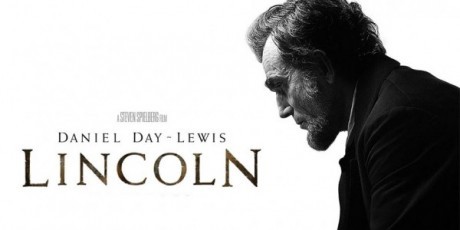
LINCOLN[/size] (2013, Steven Spielberg)
Concentrating on the president’s final months, the movie describes Lincoln’s efforts to win enough Democratic and Republican votes to pass the 13th Amendment, which would put an end, once and for all, to slavery. All this against the background of the Civil War, which is about to end, and Lincoln’s struggle with his wife and sons.
I can’t say I was impressed by this movie, nor by Daniel Day Lewis’ so-called monumental performance as Lincoln. Okay, costume and set design are remarkable, and the film has a glorious, often overwhelming look, combining ochre-colored, clair-obscur interiors with magnificent, horrifying panoramic views of the Civil war battlefields, but all felt so goddamn Spielberg, and Lincoln so goddamn Daniel Day that I couldn’t forget that I was watching a movie. This idea was also underlined by Spielberg’s efforts to create iconic moments, often involving Lincoln’s famous silhouette.
As a movie, Lincoln occasionally works and when it does, it works well, but then again Spielberg manages to blow some of the best moments: the film seems to end when the president leaves for the theatre is which his life - as we all know - will be ended by John Wilkes Booth. It was a great decision not to show the actual murder and the scene of a tired Lincoln walking, almost shambling to the door would have been a perfect ending, but then we get a couple of extra minutes that are entirely superfluous and destroy every effect.
I’ve just seen Snowpiercer last night at cinema. I can agree with most of yours opinions, but I think that movie has the message that is pretty clear and is built throughout the movie. So (SOME SPOILERS AHEAD!) the train is our world/society. There are ones at the bottom and there are ones at the top. Ones from the bottom hate the ones at the top and want a revolution so they can take over their place (there is also a middle class, happy in their oblivion and little caprices). But once someone from the bottom manage to get to the top, they only become same as their predecessors. So it goes on in circles, ‘revolutions’ are in big part staged (think South America or Middle East or Africa) and just the part of the same circle, society must survive and it is a mechanism that is built to self-defend. The only real revolution is to destroy complete society, to start from the scratch - the movie is also clearly a variant on biblical Noah’s Ark story and the message can be summarized to its message: this world is corrupt so we must destroy it and build it anew. What happens next is not up to God/director to tell us, it is again up to humans/us.
There are also various classic SF sub-dillemas: technology vs nature, overpopulation etc. Movie moves somewhat towards hollywoodian territory in contrast to Joon-ho Bong’s non-american movies, but I think it is still long way from typical hollywoodian take on this kind of subject. Bong’s direction is wonderfully left field and surreal, special effects do not take over the movie, and there is no pasted on love story (Bong fought for this movie to be released in his version). Horror elements (like the mentioned speechless superhuman guy) and action scenes help to keep tension and keep movie moving forwards.
So although I agree that there is no room to breathe for characters and that this is a kind of movie that is a hostage to its allegory, I give it 8/10. It is the refreshment among modern SF movies and wonderfully reminiscent of the classics like Planet of the Apes and Logan’s Run, while Bong’s style gives it a distinct look.
Upon your reading your post, I assent to your analysis. I would perhaps come to analogous conclusions after the second viewing, but I still believe the movie possesses too much ambivalence pertaining to the film’s atmosphere (conspicuously, here we plunge into the sphere of pure subjectiveness). I think the film ought to follow a more surreal, Refnesque trajectory in order to acquire veritably evocative oeniric flavour. Notwithstanding, via applying some tawdry action sequences, Snowpiercer diminishes its potential with some gratuitous meretriciousness and ultimately, what we are left with is the intrinsically contradictory film which is neither suggestively surreal nor gratifying in terms of action.
Movie definitely deserves second viewing, I think lot of little touches would be noticed upon it. For example I just thought back about that bizarre New Year’s countdown scene and I got its apsurdistic point.
Parallels can be drawn with Elysium - both are the first American movies for non-american directors and both are allegorical SF tales about modern society. Elysium is the one that is very ‘hollywoodian’ compared to Snowpiercer. I think Snowpiercer is more similar in feel to District 9 than Eylsium.
Seems like I should watch Snowpiercer …
This is what I said about Elysium a couple of months back:
 [size=12pt]EL[/size][size=12pt]YS[/size][size=12pt]IU[/size][size=12pt]M[/size] (2013, Neill Blomkamp)
The second movie (after Upside Down) I watched within a period of a few months about a class universe (rather than a class society), with two separate worlds, one for the rich up there, one for the poor down here. But Upside Down was a romantic feelgood movie, intelligent but not over-pretentious, and it worked pretty well; Elysium tries to echo Huxley’s Brave New World and Orwell’s 1984, and doesn’t work at all.
The story’s set in 2154 but according to Blomkamp it’s not about the future, but a comment on the contemporary human condition. Thanks for enlightening us, we hadn’t noticed it yet. Come on, Mr. Blomkamp, that’s what this genre of dystopian novels and movies is all about: they describe a future world but comment on today. Were you afraid that those hints at immigration, over-population, class-struggle, healthcare, etc. were too complicated for simple people like us? I wish Blomkamp’s comments had been a bit more spirited or thought-provoking, it all sounds hollow, almost as cosmetic as the entire look of the movie.
After his surprise hit District 9 the director was provided with a $ 115 budget, but he obviously didn’t know what to do with it. At first sight the production design looks impressive, but a first sight - a few glimpses at this world for the rich - is all we get; the poor live on an overpopulated Planet Earth, the rich on an orbital space station called Elysium, but instead of a study of life up there and down here, we get a noisy, chaotic action movie with a pumped-up and bald Matt Damon flying from Earth to Elysium, fighting enemies and enemy robots wherever he goes.
In the end it’s not a total bore, some of the action is spectacular, Jodie Foster is a mean rich bitch (getting just desserts) and South-African actor Sharlto Copley is quite funny (and so is his accent) as Jodie’s mean and ultra weird right hand. That accent is virtually unintelligible, but it only contributes to the fun. However, if you’re looking for something substantial, I recommend Huxley or Orwell.
On facebook John Nudge came up with an alternative reading:
[i]Damon plays against type - Max is a Conservative (we know this because he goes to work every day). He lives in a Marxist/Progressive Dystopia where the whole world looks like Detroit and where everyone is oppressed and miserable. They can’t even get good health care because it is socialized under Obamacare.
The Progressive/Socialist elites have escaped to Elysium, an orbiting world from where they control the means of production and tell everyone what to do. We know they’re Progressives because Jody Foster is in charge and everyone is exempt from Obamacare.
Eventually, Max goes to Elysium, wipes out the Progressive leaders, helps a little girl who was told to go home to die by Obamacare doctors and repeals Obamacare, giving everyone access to real health care and allowing everyone the opportunity to move to Elysium if they work hard, embrace Capitalism and Free Markets and make lots of money.[/i]
[size=12pt]Sorcerer - 1977 - William Friedkin[/size]
[url]Photobucket | The safer way to store your photosThe second time I watch Sorcerer, and the first one was a TV screening a long time ago.
It’s impossible to talk about Sorcerer without comparing it to Cluzot’s original film The wages of Fear, I’ read that Friedkin said his film wasn’t a remake from Cluzot film, but a different interpretation from Georges Arnault novel, nevertheless he dedicate the film to the French master. In the end and for my personnel taste remake or not, Sorcerer stand pretty well on its own, and it’s a good exemple of how a remake or a different interpretation should be made.
He story is well known, but the first part of the film where Friedkin slowly builds up the back story of every main character is a precious piece of filmmaking, the different stories are told with such an indifference that you have no sympathy or hate for any of them, and that is not easy to do specially in film.
The second part of the film is also great, there’s enough tension for 10 films. It’s a great film indeed, and the favorite of Friedkin, he always says that Sorcerer is its best film, the one he likes the most. Is it better than Cluzot’s work? Well for me is not worst, its different, I do like both films for different reasons, they tell the same story but in different ways, while Cluzot’s film was more conventional and direct, Friedkin made a very Avant-guard work, almost like an Indie film (but with a budget to spend), a good example of that is the only female character in both films. In Wages of Fear was Vera Cluzot a real pin-up type of woman, Friedkin instead uses an old woman, or at least one with an old battered face, that in an odd way only looks like a desirable woman in the last scene.
It’s a typical Friedkin film, in style is not much different from The Exorcist, he’s one of those directors with a unique style, even if more unrecognizable in later years.
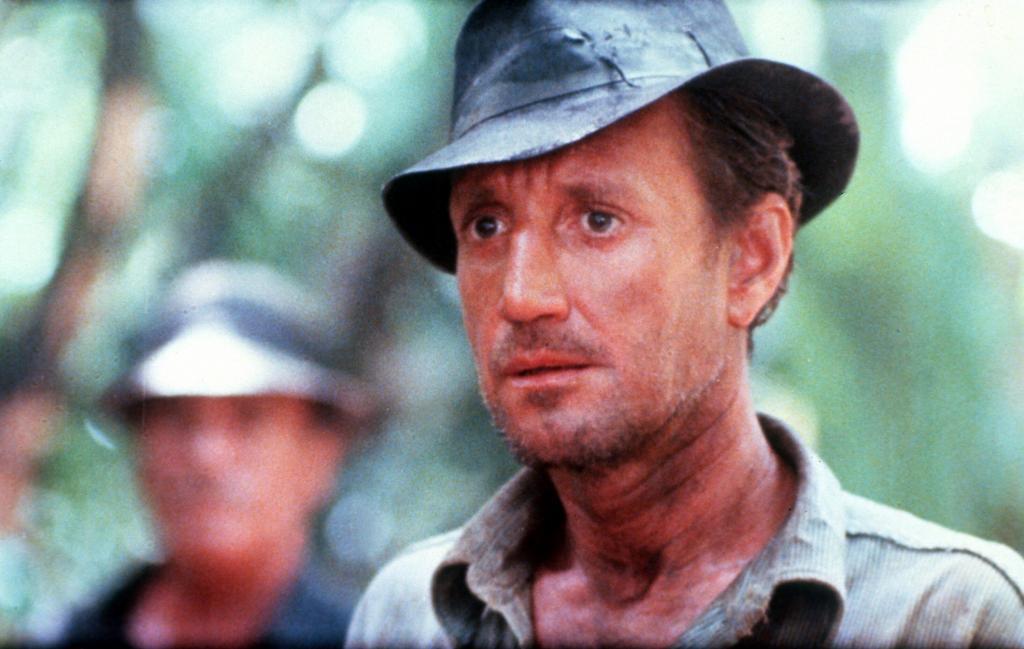
I liked the cast, Roy Scheider gives one of his best performances, he was a cool actor, from a time when action type of actors didn’t had to spend half of their days in the gym and look like bouncers. Bruno Cremer is also brilliant (a great actor), as Francisco Rabal was and also Amidou an often used character actor. I know that Steve Macqueen was billed for Scheider part, along with Lino Ventura and Marcelo Mastroiani. Of course it would have been an amazing cast also (even if Mastroinani wouldn’t be my first or second choice for any of the parts in the film), but the best compliment I can make to every main actor in the film is that I can’t imagine things with other faces.
Tangerine Dream soundtrack at first seems a bit intrusive, and for a moment or two makes you think you are watching a Michael Mann film, but after a while you fell that the music is a perfect pair for the images.
So I really liked the film, it was made with clinical precision, got some of the best tension ever put into the screen (no wonder that Hitchcock also wanted to film the story before Cluzot did it, he even bought the rights for an English Speaking version), some great acting, and has a critical quality for me, it doesn’t look artificial its palpable, a major fault I see in most (not all of course) in today’s cinema, is indeed artificiality.
Also there were obvious political concerns in the film (funny enough shown in a very Spaghettian type of way). It was a hard part of world with hard faces that Friedkin shows, with that amazing scene where they deliver the bodies of the dead in the oil drilling explosion, all filmed with indifference under a Tangerine Dream soundtrack that almost suffocates the viewer.
Understandable it wasn’t a great success when it was released Sorcerer is very far from the usual Hollywood canons for success (Star Wars was rocking at the box office at the time), so maybe that’s the reason wasn’t a proper release for this film for so long.
Great cinema
Haven’t seen this one (and The Wages of Fear not in a very long time).
I would watch it, if only for the Tangerine Dream soundtrack, and used to be a fan of the group, and still like them, although their music sounds a bit … lazy these days, as if they invented a couple of musical themes and thought: what the hell, we don’t need anything else.
I like Schneider too, he looks a little like my (late) foster father, btw. But my foster father was a very nice man who wouldn’t hurt a fly while Schneider is known for his corrosive behavior
I concur. 
I have also watched Elysium, and also was surprised how, I wouldn’t say bad, think normal is a better word to describe Elysium, at least after a tour of fource that District 9 was, maybe the director should had made a few more movies in South Africa before getting a bigger budget.
Conclusion I going to buy the Blue Ray special edition of Sorcerer and already forget Elysium
@Sorcerer
Excellent film with a fascinating story, one of my favorite from William Friedkin.
It’s too bad the film wasn’t well received when it first came out, but i think that Star Wars and for the fact that Roy Scheider wasn’t a big star had something to do with it.
The poor reception issued from the fact that the film had the rather baffling title and it was a remake of Henri-Georges Clouzot’s classic.
A Better Tomorrow 2: My favorite sequel ever, and my personal favorite John Woo Film. I went to a screening of it years ago in London, and just today watched it again. Some fantastic scenes of of a ballet of violence. A solid action thriller, with some comic undertones, such as the Fried Rice scene. Brilliant.
Scherp, Roy is a Scheider not a Schneider …
Right. Not the first time I make that mistake. I wonder why …

[quote=“scherpschutter, post:11618, topic:1923”]Right. Not the first time I make that mistake. I wonder why …
 [/quote]
Ahhh, your favourite comedian ;D
okay, I admit it