Well, I also watched this fucking amazing drama by Steven Knight, the director of flawed, but visually gratifying Hummingbird:
[size=12pt]Around the world in eighty days[/size] - 1956 - Michael Anderson
Well I’m afraid, that with two kids making an hostile takeover on every TV in the house, I’m stuck to what’s happening in the cable channels after 10.00PM.
So I started this onealmost from the start, it was a first for me, and the first surprise was to see Mexican acting legend Cantifulas in an english speaking film, the guy was more than a household name in the Spanish speaking world, a true legend, even when I was a kid he was still famous in Portugal and we don’t speak Spanish as everybody knows, I never noticed he was in this type of films, he’s real good as Passepartout.
David Niven was the kind of actor I really like, not because of his acting skills or something lke that, but because I just imagine he was the type of person I would like and would be friends with, if I would meet him, I just imagine things that way, not very scientific I know, but what can I say.
It’s a cool film to watch, a tad long, and maybe with a few scenes that are just too long ether, but still very pleaseant as a light comedy adventure film. The story is well known, and of course very cinematographic, because the action takes place around the world.
But the most fantastic thing in the film are the secondary roles or cameo appearences, you name it, from Frank Sinatra to Fernandel, just amazing. I also had a hard time to find out that the Hindu Princess Aouda was Shirley MacLaine, very young but its her.
A real classic film, and one where is possible to see the magic of cinema, that I think is a bit lost by now, it’s almost a crime to watch in a small scream this magic.
The Sweeney ( 2012 ).
Could moan at a few things in this modern reworking of the old U.K television show, but its so enjoyable for what it is really. Ray Winstone was a good choice to play the lead.
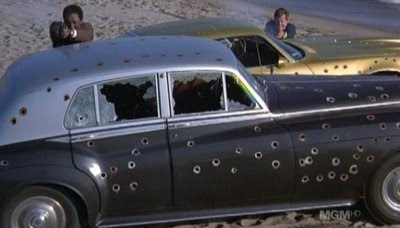
[size=12pt]HICKEY AND BOGGS (1972, Robert Culp)[/size]
Robert Culp and Bill Cosby (reunited for the first time since they both starred in the TV series from the Sixties “I Spy”) are two private investigators - down on their luck, both professionally and in their private life - who are asked to find a missing girl. Soon they’re in deep, deep trouble.
Hickey and Boggs was Culp’s directional debut. Culp was a long-time friend of Sam Peckinpah (Peckinpah had considered him for the part of Dutch Engström in The Wild Bunch - the role eventually went to Ernest Borgnine) and some of the violence and (especially) the crisp editing will remind viewers of Sam’s work, but Don Siegel must have been an important source of inspiration too and in the end I’d say the movie owes as much to Don as to Sam. It was also the first script signed by Walter Hill that was adapted to the screen.
The film failed miserably at the box-office but has developed a loyal cult following over the years. Culp’s direction is remarkably perceptive for a first-time director, with a keen eye for action and dialogue. Unfortunately Walter Hill’s script is far from great; there are too many characters and the storyline is often meandering. As a result a movie that could have been a classic, is only an okay neo-noir.
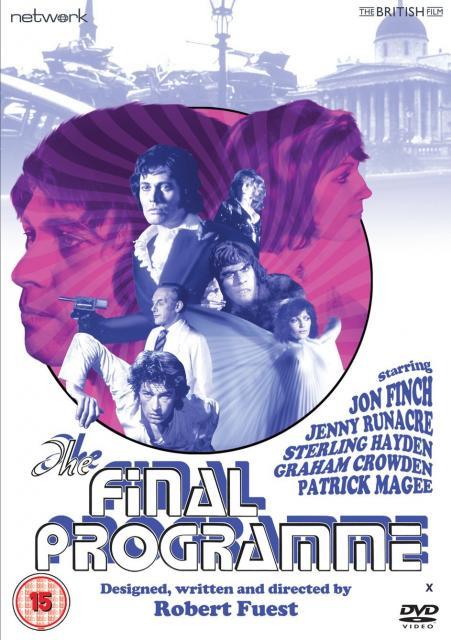
The Final Programme - 1973 -Robert Fuest
Early 70’s sci-fi is by norm a special affair, films like Zardoz, a Clockwork Orange and others come to mind. To be honest I haven’t read to novel in witch the film or any of the author books, became curious indeed.
So the story takes place in a futuristic PA society, a famous scientis dies and his son (a low profile Jon Finch), becames part of a group of scientists, that search the misterious final programme that he invented. basically the programme can replicate a new form human being. This futuristic society is full of pop art style
So a good premisse for a sci-fi film, and a great initial scene, soon turns into a boring stuff, to be quite honest I was assembling some IKEA furniture a shoe closet, while watching the film. The all thing looked like an Avengers episode turned to film, the dialogues are fine, but the surrealism like the nuns playing slotmachines, and the fat guys in the mud fight, are weird yes but just look out of placed, very far from Blow-up from Antonioni, not strange that Mick Jagger was invited for the main part, but declined the offer cause the script was too weird.
Not a good film in my book, dated in a bad way, and boring, the shoe closet came out OK. I could sense the potential of the story, but I also could sense the lack of that potential in the film.
Its the kind of film that makes us realize why directors like Kubrick, Petri or Antonioni are so good, things can be weird but should make sense even if in a weird way.
Its a tough film to sit through without wanting to fall asleep  .
.
Funny enough I watched The Final Programme this evening.
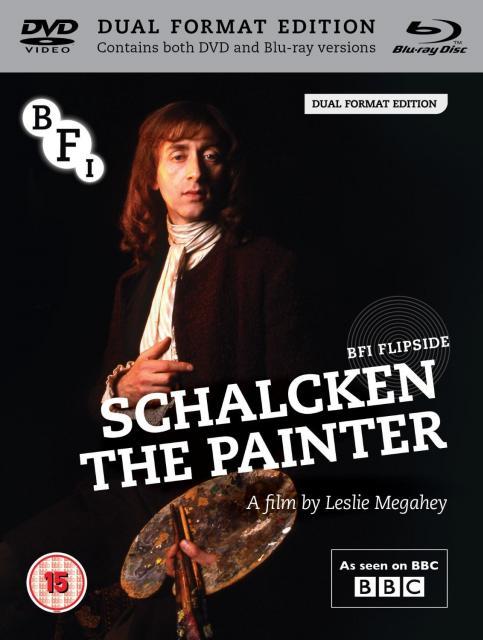
Schalcken The Painter - What a load of shit.
Red State - A religious nutcase (played by Michael Parks, he’s great in the role) who runs a church, along with his followers are killing sexually promiscuous people in order to ‘cleanse’. Really enjoyed this, a whole lot better than I was expecting it to be. Maybe Smith should make more films like this.

The Final Programme - Strange film, I was enjoying it for the first three quarters of an hour or so but found the rest of the film a bit of a chore to get through. Nice to see that some of it was filmed in Almeria.
The parts filmed in Almeria were most of the outdoor scenes ,in the beginning and in the old abandoned house. The mixed between a spy story and weird sci-fi just didn’t work for me, maybe with botttle of absinthe.
[quote=“Stanton, post:11536, topic:1923”]It would not necessarily. King wrote the book, this is a film.
And it is a mainstream film, and probably one which is touching.
As far as I remember it, the film did not make much of an impression when it was released here in Germany. I can’t even remember that I read anything interesting about it, while the other films at least became part of a discussion.
I should watch Shawshank the next time it is on tV.[/quote]
From my understanding the reaction from around the world was the same as Germany. The movie was low budget and with very little promotion and was poison at the box office. It got a bunch of Oscar nominations but even that didn’t really help. Its reputation grew years after its release through word of mouth and video sales.
So it actually started out as a little cult film, but eventually grew so popular that it became mainstream.
But then again films like Citizen Kane and 12 Angry men had similar trajectories so its not surprising, but very interesting nonetheless.
Castellari: New Barbarians
-Castellari’s post-apocalyptic action film is pure camp from start to finish. Bad acting, bad special effects, homosexual villains, annoying kid, weird cars and outfits… This one got it all. Best way to watch this is probably with few beers and friends who love bad movies.
I fucking love this film:
[quote=“Mickey13, post:11552, topic:1923”]I fucking love this film:
http://www.furiouscinema.com/2014/05/great-beauty-2013/[/quote]
Will probably watch it this weekend.
I’ve no idea if you’re going to like it. It might prove to be style-over-substance material for you, but for me every single inch of the cinematic yarn is absolutely delight-inducing. Plainly stunning.
The Assignment -1997- Christian Duguay
My second viewing of this forgotten film, now and also when it was made, it went totally of the radar. Most likely I will normally watch it again in the future.
Its a good film, one of the several it was made about Carlos the chacal, and in my opinion better than the one with Gere and Willis (funny enough they came out the same year).
Aidain Quinn plays an US navy officer that is a Carlos the Chacal lookalike, they are perfect copies, so the CIA uses the navy officer to set a trap to the real terrorist.
Quinn plays against type, but he’s actually good doing both different parts, but the film as a all works better than the one Michael Caton-Jones cause of character build, with the changes of Quinn as he enters the elusive world of espionage.
There’s a great chase sequence in the casbah, very well done. Its a very classical thriller, made without any schemes or subplots other than the history.
So in the end an interesting thriller easy to watch with some great actors, like Ben Kingsley and D. Sutherland. It was indeed cursed from the start cause it premiere in the same year as “The Jackal”, a bigger budget film made with more means but less quality.
Recommended
I can appreciate style. I love, for instance, a film maker like Brian De Palma, whose work is often more style-over-substance. The Coen Brothers ditto. And what to think of Fellini and Antonioni ? What I do not like, is a certain shallow or hollow pretentiousness that could be described as style suggesting substance. Most movies by Godard and some (so not all) by Lynch or Kubrick have that effect on me.
I know that, Scherp. It’s just that this Sorrentino’s film is exceedingly impressionistic, but simultaneously enriching and genteel.
To my way of thinking, there is a very narrow boundary between good art and narcissistic, complacent pretentiousness, particularly nowadays, once the art-house and mainstream cinema seem so conspicuously demarcated from each other in my view. I’m perhaps not sufficiently acquainted with the contemporary art-house cinema to judge so, but it appears to me that the cinema used to be a little more international in previous decades than it is nowadays.
For me, art or particularly this ilk of art (so-called art-house) should prompt its viewer to bestir, in some intellectual way - even if it is somewhat abstract in its form. Anyway, for instance, Tabu (2012) by Miguel Gomes (a style-over-substance film) is a neatly constructed art-house pic, but it is pretentious, as it overly relies on its aesthetic decor and IMHO its thematic is a camouflage for the film’s intrinsic hollowness. It invokes a lot of social problems, never developing them and plunging into the slough of pretentiousness.
On the other hand, this sort of art cannot be too analytical either. Once I watched Vivre sa vie (1962) by Godard several weeks ago, I read a review written by Susan Sontag. She provided me with an analysis on the film which was a little too opaque to my taste (possibly I should re-read it), but what struck me about it was how slickly Sontag expounded the role of a work of art and I assent to her view on the matter.
All art may be treated as a mode of proof, an assertion of accuracy in the spirit of maximum vehemence. Any work of art may be seen as an attempt to be indisputable with respect to the actions it represents.3
Proof differs from analysis. Proof establishes that something happened. Analysis shows why it happened.
(…)
Analysis is substantive. Analysis is a mode of
argument that is, by definition, always incomplete; it is, properly speaking, interminable.
(…)
The extent to which a given work of art is designed as a mode of proof is, of course, a matter of proportion.
Surely, some works of art are more directed toward proof, more based on considerations of form, than others.
But still, I should argue, all art tends toward the formal, toward a completeness that must be formal rather than
substantive—endings that exhibit grace and design, and only secondarily convince in terms of psychological
motives or social forces.
I absolutely subscribe to this and I realised that I held an analogous opinion whilst viewing Von Trier’s Nymphomaniac (I’d call it substance-over-style material, slovenly as it sounds). The way I see it, Nymphomaniac could have been a perfect film, a flawless 2-hour-long flick. Notwithstanding, Von Trier resolves to protract the film’s length to preposterous degree just so as to cram his analysis of the world into the movie. There is everything in there: fisherman’s pieces of advice, bourgeois origin of dessert fork, etc. Such gigantic digressions would work in a book much better, but they do not function in a film - any film should have a structure and Nymphomaniac’s structure resembles a deflated balloon in its flaccidity. Initially, the digressions only slightly distract, but after a while, they simply enrage and convey an irresistible sensation of pretentiousness. But it is not an objective fact, as Stanton, whose opinion I esteem a lot, enjoyed it thoroughly.
Finally, Sorrentino’s The Great Beauty is such an enthralling film precisely as it manages to preserve structural poise - it alludes to numerous thematic nuisances, minus feeling pretentious. The ample aesthetic content is counterbalanced by equally ample palette of themes. But this feeling of being non-pretentious solely concerns me. You, on the other hand, might find it pretentious. And adjectives “style-over-substance” and “pretentious” are equivalent for me. Style is the artistic core of the film, but the moment style outweighs substance (i.e. the composition and the themes) and the pic derives its value mostly or only from the aesthetic resonance, it becomes pretentious. Some pretentious films are nice to view, but ultimately, they cannot exceed their being pretentious.
For me, “style-over-substance” somehow doesn’t pertain to films which are great on account of their execution - there are genre films which are exactly good, since they are crafted with taste and pretentious genre films somehow seem more sporadic. For me, “style-over-substance” almost always refers to the arty farty motion pictures which pretend to be art and they most certainly are not. Therefore, it appears to me that the art-house films need to possess a relatively sturdy structure and a well amplified main topic to warrant and assert their status of being a work of art - a work of art that is intended to disclose some sort of truth regarding this world or another world situated in another dimension, whatever, I feel I’m growing pretentious now. That is, of course, the way I see it. I elide that some people might find excretion smudged on a canvas a work of art, considering it to be something groundbreaking or what-so-fucking-ever.
Verbalising as straight-forwardly as possible, I mean that The Great Beauty might not make you think as much as it was in my case - you might find it less thought-provoking or simply perfunctory in its execution.
I hope you don’t mind my verbose response as much as that my post isn’t particularly inept or inscrutable. It’s a little late, I’m somewhat fatigued and I hope my reasoning and formulation of my notions isn’t that nebulous. 
Lady Frankenstein
-I watched this from youtube, quality was shitty and it was obviously heavily cut. Joseph Cotten plays Baron Frankenstein but he’s only in the first 30 minutes of the film but that doesn’t matter because it’s Rosalba Neri as her daughter who is the real star of the film. She’s just amazing in this film, probably her best role. Film has a fair dose of sex and violence which makes it stand out from regular Frankenstein films but like I said the print was unfortunately cut.
Quote Mickey:
"And adjectives “style-over-substance” and “pretentious” are equivalent for me. Style is the artistic core of the film, but the moment style outweighs substance (i.e. the composition and the themes) and the pic derives its value mostly or only from the aesthetic resonance, it becomes pretentious. Some pretentious films are nice to view, but ultimately, they cannot exceed their being pretentious."
I don’t think style-over-substance and pretentious are equivalent, but otherwise I agree with most things you say. It’s hard to separate style and content in an absolute sense, both are essential elements of a work of art, the one cannot really exist without the other. That’s probably what makes you say:
“the moment style outweighs substance (i.e. the composition and the themes) and the pic derives its value mostly or only from the aesthetic resonance, it becomes pretentious.”
That’s more or less my opinion too, most people call this “empty esthetics”
But still this doesn’t quite explain the appeal of a film maker like De Palma. I don’t think movies like Blow Out, Dressed to Kill or Body Double have any real ‘substance’, I’ve never detected any interesting ideas in them. At the same time they’re highly stylised and I enjoy them a lot. Is this experience purely esthetic? I don’t know. The movies may be ‘empty’, devoid of ‘ideas’, they’re manipulative thrillers, visual puzzles, and the esthetics contribute to the effectiveness of the movie. What pleases me, is that De Palma doesn’t suggest any extra intellectual layers, what you see is what you get, and it asks more than enough of your attention (that why you can watch his movies over and over again). This is close to Susan Sontag’s formalism, but I’m not sure if De palma was her cup of tea. Susan was quite pretentious herself.
Oh, I think Freudians would find plenty of substance in De Palma’s films to indulge in psychoanalysis. Maybe we can call it sub-substance then. 