The Last Movie You Watched?

The first title is the best… ;D ;D ;D

Never have I seen it so far and I don’t think I’ll. As regards Tenebre, it’s great, but it lacks the class of Deep Red. On the other hand has one of the best tracking shots (lesbian death scene) in the history of horror genre. Fabulously crafted, pure artistry.

Mother Of Tears is truly diabolical. I haven’t seen Giallo but apparently it’s even worse!

I found Mother of Tears quite enjoyable, not good, but an entertaining mess so to speak. Giallo really wasn´t that bad either and Phantom of the Opera was an ok horror film. These films of course don´t compare well to Argento´s best stuff, but they´re not so dreadful as most say. Personally I was bored with Trauma. It was years ago that I saw it, but I remember the incredible sense of boredom I experienced watching that film. The Card Player is pretty shitty as well.

I thought Trauma and Card Player were both a darn sight better than Phantom or Tears.

I’d say Phantom Of The Opera is 10 times better if only for the midget decapitation scene and the impaling scene. The Card Player felt like a crappy Criminal Minds or CSI episode.
I agree Phantom that it’s not a good film by any means, but I think it’s a fun/entretaining B-grade mess. It was sad to see Argento go in that direction, but it was worse what he did with Card Player, and don’t even get me started on Do You Like Hitchcock?.

Farewell, Friend… 1968. Charles Bronson and Alain Delon play ex-Foreign Legionnaires in Paris, who are duped into serving-as patsies in the robbery of a securities-firm’s payroll safe. The plan had them hiding in the safe over the Christmas Holiday, but they realized the robbery had already taken place. They had to escape from the safe and figure-out who tricked them… while cleverly alluding the police. An excellent thriller.

“Phantom Of The Opera was the first of Argento’s “Pieces Of Shit” in my opinion.”

I really like Sleepless. Out of all the turds that have shown up in Argento’s toilet recently, Sleepless smells the best :wink:

I don’t really like any of them after Opera… though Card Player is probably the best of them, for me

Yesterday, with my new new 60’’ HD Plasma TV set up along with my new Blu-ray player, I watched my first ever Blu-ray. I only have three at the moment: M (Masters of Cinema Dual Format Edition), Oedipus Rex (Masters of Cinema Dual Format Edition) and Children of Men. I hadn’t seen Pier Paolo Pasolini’s Oedipus Rex before, so I watched that. The level of clarity and detail is incredible on the Blu-ray and I have to say, I was astounded. I certainly have no regrets about this up-grade! The film itself is superb: a savagly clear depiction of Sophocles’ paly, set in a “land out of time”, filmed on location in Morrocco and beautifully performed by the entire cast. It’s my first Pasolini, but it won’t be my last.

THE ACCUSED - Jodie Foster is gang-raped on a pinball machine inside a bar with a few customers watching and encouraging the act. Kelly McGillis as an attorney is on her side and tries to bring the people who encouraged the rapists to justice, while having made the mistake to make an out of court deal with the real rapists before. Foster won an Oscar for her performance and while her acting during her testimony is truly amazing, the rest of her performance didn’t convince me that much. Kelly McGillis, on the other hand, left me a bit cold. I expected a more dramatic confrontation between the opposing sides at the court, with stronger arguments and the examination of more witnesses; generally the courtroom phase should have been given more time instead of us watching Foster getting angry at McGillis half the film. The rape scene is a harrowing spectacle and quite uneasy to watch, one of those scenes you can’t forget so easily.

[url]http://imageshack.us/photo/my-images/27/mywayposterartworkdongg.jpg/[/url] [size=12pt]MAI WEI[/size] (My Way - 2011, Kang Je-gyu)

A follow-up to the immensily succesfull THE BROTHERHOOD OF WAR of the same director. When I tell you it was called the ‘Korean Heaven’s Gate’, you will know what happened: the film flopped and the fiasco might have a negative effect on Korean cinema in the next few years.

The film is partly based on facts: In 1944, in Normandy, American soldiers saved the life of a young Asian in the uniform of the German Wehrmacht, because they wondered what a man who didn’t speak a single word of German (nor of any other western language) was doing on Utah Beach. It turned out to be a Korean called Yang Kyoungjong, who had served in the Japanese, Russian and finally the German army.

It would’ve been better if they had filmed the incredible (almost unbelievable) life story of this man, but instead they introduced a second character, a Japanese young man, who’s at the same time Yang’s rival and friend. They’re both marathon runners and their life stories intertwine in different uniforms, on different continents. And it all ends up in Normandy.

It still is an interesting story, but the script is too episodic and there’s not enough insight and too much sentimentality (already a problem of Brotherhood): every dramatic turn is emphasized by dozens of violens and there’s also a choir of angelic voices, making the whole affair look (or at least sound) like an epic soap opera. However, it’s not a bad movie, and this finale (D-Day seen from the German perspective) is quite spectacular.

6/10

The incredible story of Yang Kyoungjong:

[size=12pt]http://en.wikipedia.org/wiki/Yang_Kyoungjong[/size]

La proprietà non è più un furto (1973) by Elio Petri.

A young bank worker Total (Flavio Bucci) witnesses a robbery, in which one of the thieves gets caught and beaten by an avaricious, rich butcher (Ugo Tognazzi). He can’t come to terms with the fact that in spite of being always a righteous man, he has never managed to gather as much money as all other people including the above-mentioned man. He vows to prosecute him and drive him insane by stealing everything that belongs to him, along with his lover Anita (Daria Nicolodi).
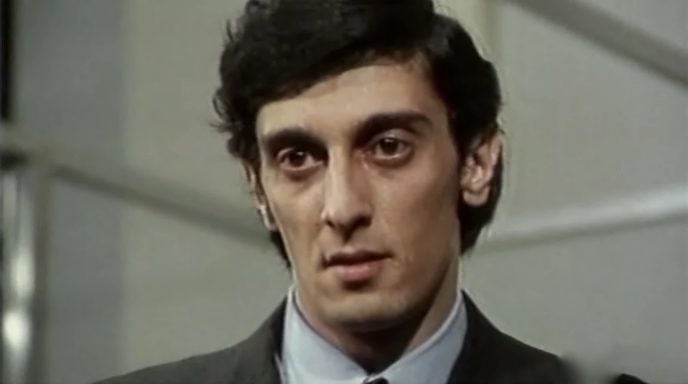
In this third part of “the neurosis’ trilogy”, Petri tackles inequality in society, the issue of property and last but not least money itself. None of Petri’s movies is straightforward and this one is no exception. While among Petri’s works are more and less demanding ones, this one must be together with Un tranquillo posto in campagna (1968) and Todo Modo (1976) his weirdest creation. Therefore, there is nothing strange about the fact that the film wasn’t acclaimed in its premiere. It’s a bold, remarkably modern satire which is bound to leave you confused and make you think about it long after it’s over. Apart from his usual collaboration with A-grade cinematographer Luigi Kuveiller (Argento’s Deep Red, 1975), the director utilizes a really grotesque plot and a perfect illustration of this is our protagonist who is allergic to… money. In addition to this, there is a frequent use of stagey scenes, therefore the ensemble looks everything but ordinary. A soundtrack is composed by Ennio Morricone. It is very avan-garde and owing to some creepy whispers included (Io ho – I have, tu hai- you have, egli ha – he has, essi hanno – they have) already comments the events that are occurring on the screen.

The cast isn’t too bad, unfortunately Flavio Bucci, who is surely a good actor, appears to be a bit inexperienced in comparison to Volonte for example, thus the film lacks a strong leading actor. Daria Nicolodi and Ugo Tognazzi give strong performances. One can spot Salvo Randone as well, who as always plays his role very well.

With this flick, Petri shows that human takes part in the rat race in order to become more powerful, socially accepted and approved, irrespective of all hidden necessary, immoral ways. The character of the butcher represents the rich and Petri points out that all those people who want to dominate, are unscrupulous and pitiless, as the poor who often are honest ones will never achieve better life conditions, since either they are limited by religious as well as state laws or on breaching overtly all those moral boundaries they are banished from the society. The only way to render their life acceptable is to obey the rules and submit to opulent people, who are protected on account of their wealth and power. Another interesting aspect of the movie is comparing a bank, which is heart of consumerism, to the church. To make this allusion even more visible, the bank is full of images depicting the Holy Trinity. Also, just like in the “Holy Church”, in the rat race, which is called here a “religion of property”, there is a certain hierarchy and blasphemies (when the clerk Total sets a banknote on fire, the director is disgusted and almost throws a tantrum).

However, it’s more fascinating to analyze it than to behold it, as the plot seems to flow quite slowly, there isn’t enough black humor to keep the climax amusing. The script with its full resonance overwhelms the viewer to the extension that one feels a bit tired and the twisted marxism-madrakism message appears to be slightly too radical. Nonetheless it does have plenty of splendid ideas, electrifying score of Morricone, erotically-tinged atmosphere, strong direction, and hence this is a good piece of political cinema. Although it isn’t as marvelous as his previous films, it certainly encapsulates the political situation of those times in Italy perfectly. 7/10

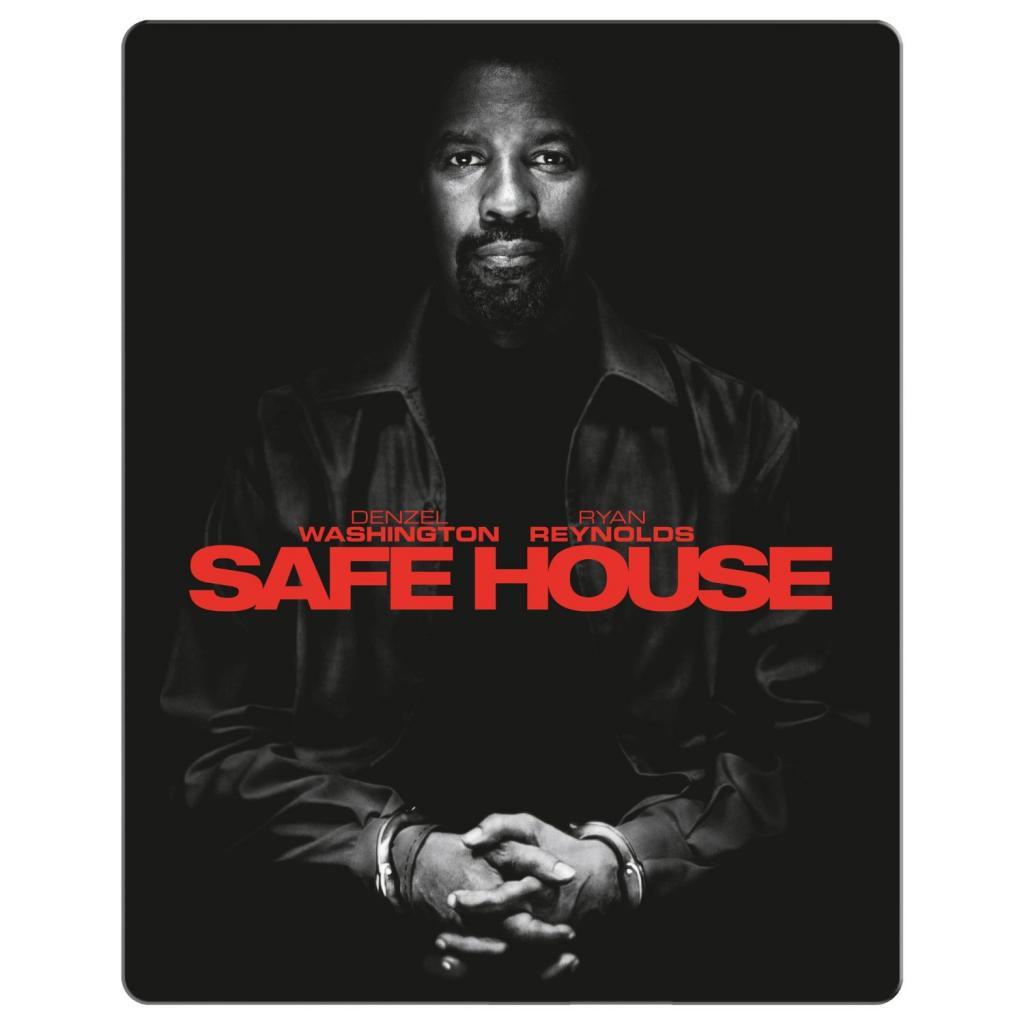
Safe House - Better than I was expecting it to be. Nothing to get excited about be definitely worth a watch, Washington as usual gives a good performance.

Just watched These are the Damned. Great movie. Turned into something completely unexpected after the first 20 minutes.

On The Waterfront (1954). Classic movie.

Classic indeed.

I watched Sanjuro. Expected something superb after wonderful Yojimbo, but I got a mixed bag. An unconvincing movie that relies on Toshiro Mifune’s too much (without him the flick would be rather uninteresting). Even Tatsuya Nakadai’s character wasn’t particularly memorable.

Yes, but there was this incredible fountain of blood …

On the Waterfront on the other hand belongs to the totally overrated movies for me.

I love On the Waterfront: Marlon Brando, Karl Marden, Eli Kazan are all on top form and the “look” of the film is wonderfully bleak.

Too much theatre acting, too much playwright dramatics. Brando is good though.

I was comparatively disappointed last time I watched it. 6/10

I’m just reading Kazan on Directing. He utters some insightful thought about the worth of screenplays for a film (“it has to be measured less by its language than by its architecture”). And about making films in general. In the 70s. Too late to influence his “classic” movies.

Yes, but there was this incredible fountain of blood ...

William Connelly told me this was where the fountains of blood in The Wild Bunch came from.