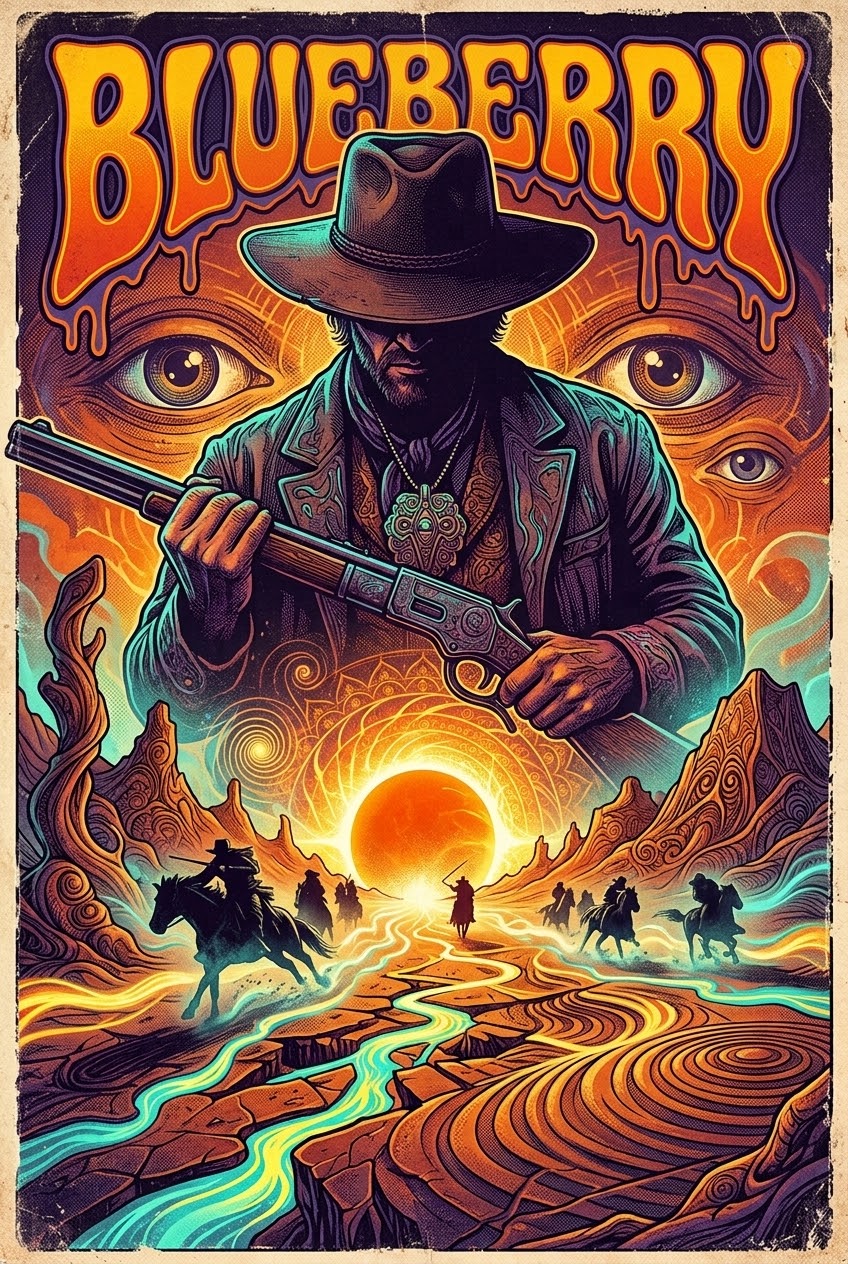
Fair enough. I understand your point. Like I said, it was a prompt test.
the prompt (can be applied to any image:
Transform the supplied reference artwork into a radically reimagined, intensely psychedelic stoner metal and doom metal album cover. Preserve the essential identity or most iconic motif of the original, but take bold creative freedom with its composition, environment, color palette, lighting, and surrounding details.
CORE ART DIRECTION
Cosmic desert mythology meets 1970s psychedelic underground poster art, heavy doom metal, occult surrealism, vintage fantasy illustration, desert mysticism, and hallucinatory landscape painting. The artwork should feel ancient, monumental, hypnotic, ominous, and otherworldly, like a lost underground metal record sleeve from another dimension.
COLOR PALETTE
Burnt orange, oxidized rust red, blazing solar yellow, luminous turquoise, deep indigo, bruised purple, and near-black. Create dramatic contrasts between scorching warm highlights and unnaturally cool shadows. Use turquoise and violet as unexpected colors in rock formations, distant mountains, clouds, and atmospheric shadows. Let fiery orange and yellow illuminate the central focal point. Colors should be intensely saturated but unified by a cohesive vintage print aesthetic.
FULL-TRIP PSYCHEDELIC IMAGERY
An immense alien desert beneath an impossible cosmic sky. Monumental rock formations bend and twist like living organisms. The horizon melts into spiraling celestial geometry. An enormous sun, eclipse, or otherworldly planetary body dominates the atmosphere. Rivers of colored light snake through the landscape. Dunes ripple into concentric patterns, mountains dissolve into ornamental linework, and distant structures distort according to dreamlike physics.
Integrate strange sacred geometry, hypnotic spirals, warped perspective, liquid contours, celestial eyes, intricate mandala patterns, surreal shadows, and subtle occult symbolism. Make the landscape appear to breathe and mutate. Create an overwhelming sensation of altered perception without sacrificing the readability of the central composition.
COMPOSITION AND DEPTH
Establish one unmistakable central focal point derived from the reference artwork. Surround it with a layered environment of foreground silhouettes, intricate middle-ground details, and an immense atmospheric background. Use exaggerated scale, dramatic perspective, twisting contours, and a strong visual pathway that draws the eye toward the center.
Balance dense psychedelic ornamentation with deep negative space. Let selected shapes melt into their surroundings while maintaining clear silhouettes and visual hierarchy. The image should reward close inspection without becoming random or unreadable.
ILLUSTRATION AND PRINT TEXTURE
Hand-painted 1970s psychedelic poster aesthetics, intricate hand-drawn engraving, vintage science-fiction book illustration, expressive ink linework, distressed screen printing, coarse halftone grain, faded ink, imperfect registration, subtle paper wear, and rich analog imperfections. Combine painterly atmospheric gradients with crisp ornamental linework and rough printed textures.
Avoid the sterile appearance of modern digital concept art. Every element should feel tactile, illustrated, and deliberately composed.
MOOD AND ATMOSPHERE
Heavy, hypnotic, ancient, cosmic, ritualistic, dusty, apocalyptic, surreal, and deeply immersive. Psychedelic without becoming cheerful. Colorful without losing darkness. Ornate without becoming cluttered. The overall feeling should evoke an endless desert pilgrimage through an alien universe under the influence of an impossible cosmic event.
FINAL PRESENTATION
Professional square album-cover composition. Extremely rich visual detail, striking color contrast, strong central silhouette, carefully controlled saturation, layered atmospheric depth, cohesive vintage print treatment, and instant impact at thumbnail size.
Use the uploaded artwork as the source of the redesign. Retain its essential identity while boldly reinventing the composition and environment. Do not merely apply a color filter to the original.
NEGATIVE DIRECTION
No generic fantasy landscapes, glossy 3D rendering, clean corporate vector art, sterile photorealism, random fractal overlays, generic AI-generated visual clutter, pastel color schemes, excessive bloom, uniform rainbow gradients, or polished modern sci-fi aesthetics. Avoid illegible accidental text and watermarks. Preserve any existing lettering only if explicitly required.
This one had some extra tweaks in regard to the lettering