Agreed. Two cameras? Is this Jacques Tati shooting a B&W and color version of Jour de Fete? Scorsese shooting his first 3D film?
No, they are not shooting the same angle. I should have made that clear. I didn’t think that anyone would misconstrue that. Corbucci is shooting a scene with two cameras pointing at different parts of the action to save time.
However, just to blow your mind, it was quite common in Italy in the 1950s and 1960s, particularly with Peplum, to shoot a scene with two cameras framing almost the same, so that they had two negatives, one for Italy, and one for International sales. Ordinarily you would just dupe the negative, but then picture quality was reduced. The following films were shot with two cameras: Loves of Hercules, Slave of Carthage, Nefertite Queen of the Nile, Mary Magdalene… lots more.
This was probably first done with Fritz Lang’s Nibelungen - the Siegfried saga. Although, he did three versions of each scene, but not simultaneously.
No, using two cameras to record different angles of the same scene to save time. Quite common practice.
The Big Trail, directed by Raoul Walsh starring John Wayne was shot with both a Widescreen camera and a standard 4:3 camera. They shot most of the specatacle scenes simultaneously, but the dialogue scenes were shot first for one format and then for the other. So if you compare the films you will see differences in performances between the two.
Then the other gobsmacking thing is that while Walsh was shooting his American version, Directors and crews from Italy, Germany and France were shooting the same story with lead actors from their own countries, performing the scenes in their own languages.
So that’s 5 versions. Jacques Tati was an amateur compared to Raoul Walsh. You won’t be surprised to know that I don’t like Martin Scorcese films because they are usually too long and boring.
IMDB. Ignore the posters. 4th Picture. Where’s Angie Dickinson’s chin?
Fifth picture, lot of space above Nancy Wilson’s head
8 Claude Akins. 10 Norman Fell. 11 John Cassavetes. 12 Angie Dickinson.
All badly framed in the widescreen shape presented by IMDB.
But hey, click on each picture and you get the 4:3 as it should be seen.
Naturally I won’t waste time and money on the BluRay.
I know Corbucci regually shot with two cameras, called cross-shooting (sometimes cross-coverage).Do it on a ton of commercials and I hate it. Usually for Dialogue scenes in our case. I have not seen where he and Enzo Barboni employed it on the Hellbenders.
Ehhh … 4th picture, I see her chin and also her neck.
5th picture, if open matte there would be even more space.
8th is also absolutely normal
There must be something wrong with how you see these images
10 - 12 are in 1,33:1 , and I can easily see how it would look in widescreen, also all the following ones, there is always the same amount of space above the heads intended for masking.
In my opinion, anyone calling Siegel’s framing in The Killers ‘hacky’ fundamentally misunderstands the craft. It was shot for the 1960s TV box, resulting in a brutal, stripped-down efficiency that directly influenced guys like Tarantino. When you actually work in the trenches on a set, you realize directing is 70% surviving studio politics and maybe 30% creativity, making it a miracle when greatness survives the gauntlet at all. Outside of the political nightmare that was “Jinxed!”, Siegel consistently beat those odds; he wasn’t a hack, he was an auteur wrapped in a journeyman.
1 Like
I was a Film Editor. I worked in the craft. Glad I survived for thirty years in the craft when basically misunderstanding it.
And yet they did. Can’t see them putting a hard mask in for the first shot, then taking it out again for the next shot.
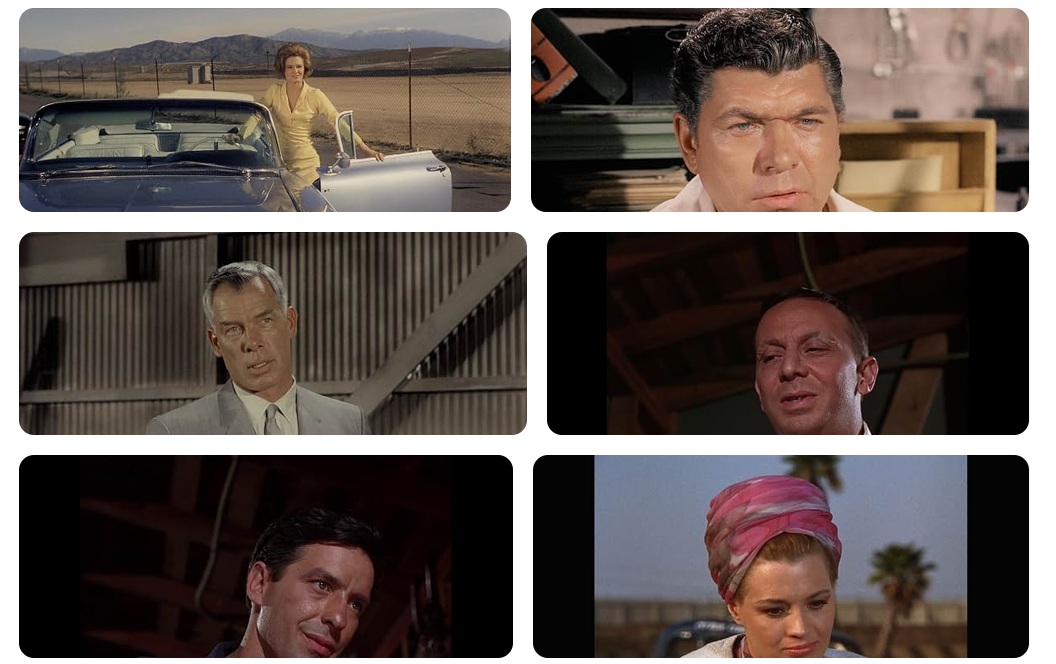
That’s how they show in imdb. However, if you click on them twice, you can get the 4:3.
Interesting looking at the photo collection. Looks like a talkie movie, full of close-ups and mid shots. No interesting framings. Hack TV movie. Adore it all you like.
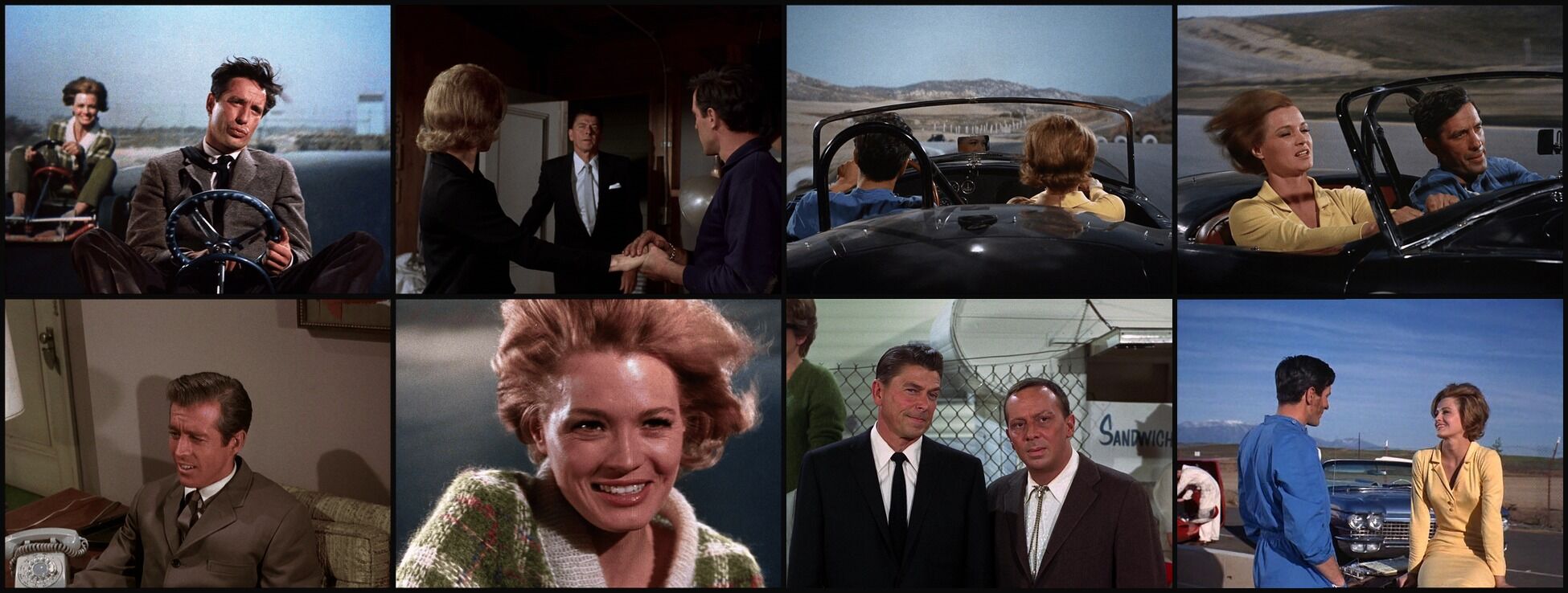
Other than a little extra headroom, they look fine to me. In fact the framing and overall camerawork is really fun and punchy. Most of these are moving shots so taking a still is always out of context of the scene, doesn’t undercut the point about the camerawork though, if anything it means the composition holds up even without the movement carrying it.
Interesting about Raoul Walsh and the Big Trail. I did not know that.
Fair enough, that clears it up. And that trick with the dupe negatives for Peplum is a great bit of history, I didn’t know two cameras were being used for parallel exports that early. Reminds me of what Ridley Scott does now, shooting with five cameras for coverage. You gain a ton of footage to cut with but I’ve always felt you lose something in the process, the POV gets diluted when you’re covering a scene instead of composing it.
Did Leone use multiple cameras? The 30m of outtakes shown on the FoD Blu Ray are almost all alternate takes of scenes from different angles. It’s very interesting that Joe’s first gunfight was shot from angles that never made it into the Final Cut. Did Leone set up the camera 4/5 times or do it or 1/2 with multiple cameras?
Leone used three cameras on the bridge in GBU. Unfortunately, none of them were turning when the military explosives expert blew up the bridge too early. The Spanish military were so upset about the mistake, that they rebuilt the bridge in quick time, and when they blew it again, all three cameras were turning.
With big events, casts of thousands, explosions, unrepeatable action (!!!), directors always use more than one camera.
FOD was low budget, so shooting quickly with multiple cameras was probably a good way to go. But I cannot say for certain.
It was shot on the same sets and simultaneously with BULLETS DON’T ARGUE starring Rod Cameron in order to save money. FOD wasn’t expected to do well at the box office, the money was on BDA which was seen as the major feature, with FOD bringing up the rear.
Yes, it’s all about coverage. When Raoul Walsh (him again) shot ESTHER AND THE KING, he would shoot the same scene over and over just in case he hadn’t covered everything. The Italians were shocked at how profligate the Americans were with film, after all they invented Techniscope to half the cost of film stock.
The Director of Photography on the movie was Mario Bava and he started to rip out the pages from the script when each scene had been shot, so they couldn’t go back next day and do it all again for coverage.
It looks like a TV movie. In the UK, they used to sell Hollywood TV movies to the cinema chains. That’s how we got DUEL. We also got five Man From UNCLE movies which were basically two episodes stitched together from the TV series to make a single movie.
Although I believe To Trap a Spy was one episode with a newly shot central section featuring Luciana Paoluzzi being sexy with Robert Vaughn that would never have made it to TV and was just filler to bring the movie up to feature length.
Ok, I have no idea how that could happen, but as I assumed you see there quite different photos than I. The ones you have posted here are in a 2,35:1 aspect ratio, which is of course totally wrong, while the ones I see in IMDB are in the aspect ratio the film was most likely made for, in 1,85:1 (the first 3).
What I see is the same at the top, but on the bottom I see about 20 or 30 % more of the image.
Actually the last 3 are in open matte 1,37:1, but are also missing the bottom parts in your post.
And they all look fine. While the ones you posted look indeed very odd.
And the ones that moviemaker posted can all be easily matted for a 1,78:1 or a 1,85:1 aspect ratio, and look then much better, and less like made for TV.
Fine. It’s still a TV movie.