… or the unfunny Spike Milligan bio, ‘Adolf Hitler: My Part in His Downfall’, which was paired with, ‘Adios Sabata’ … it’s also a pet peeve of mine, when the first half of the double feature is a scope 2.35 ratio film, followed by a 1.85 movie … it defeats the purpose of having widescreen … in the cinema your eyes will adjust to the scope wide screen and then it has to readjust to the smaller frame.
2 Likes
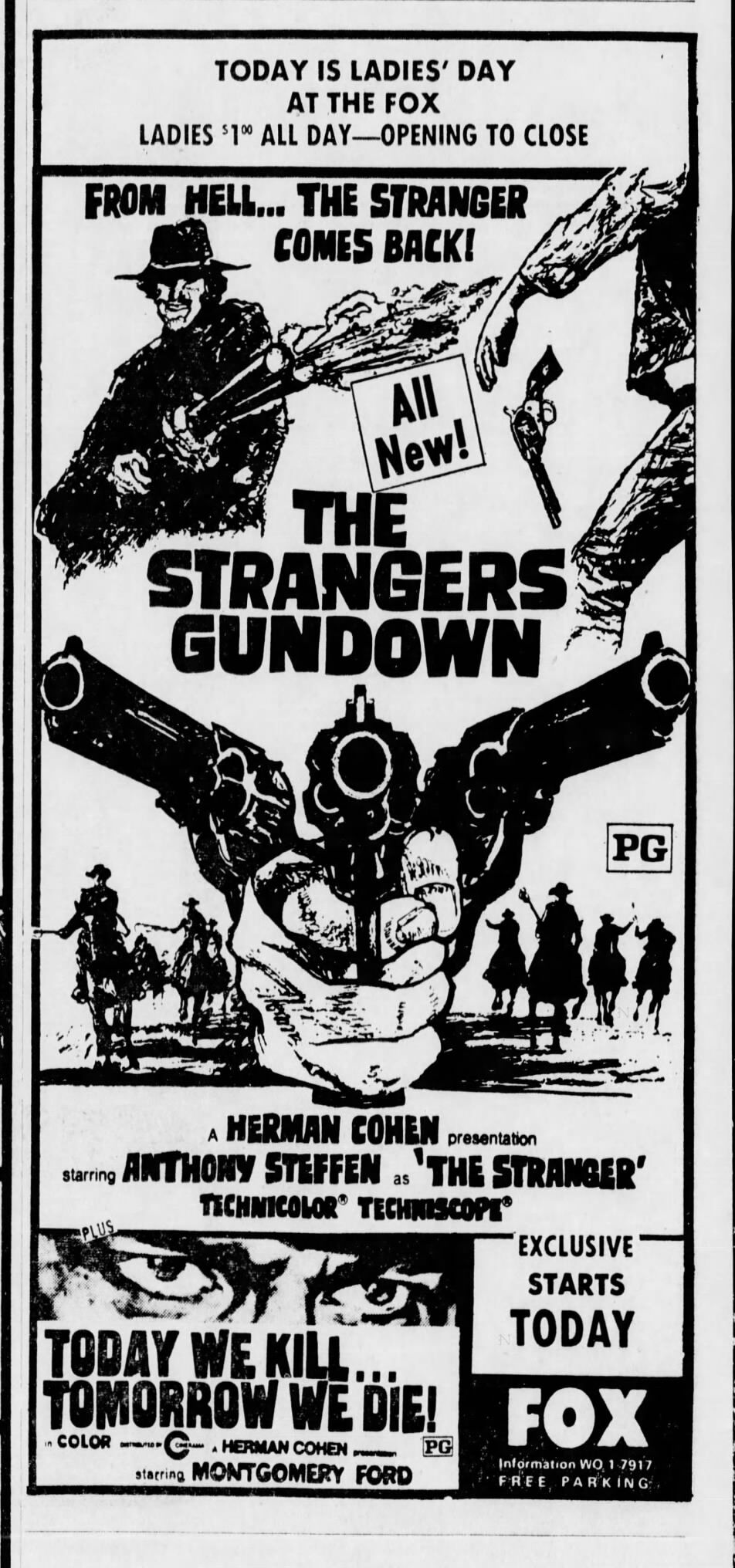
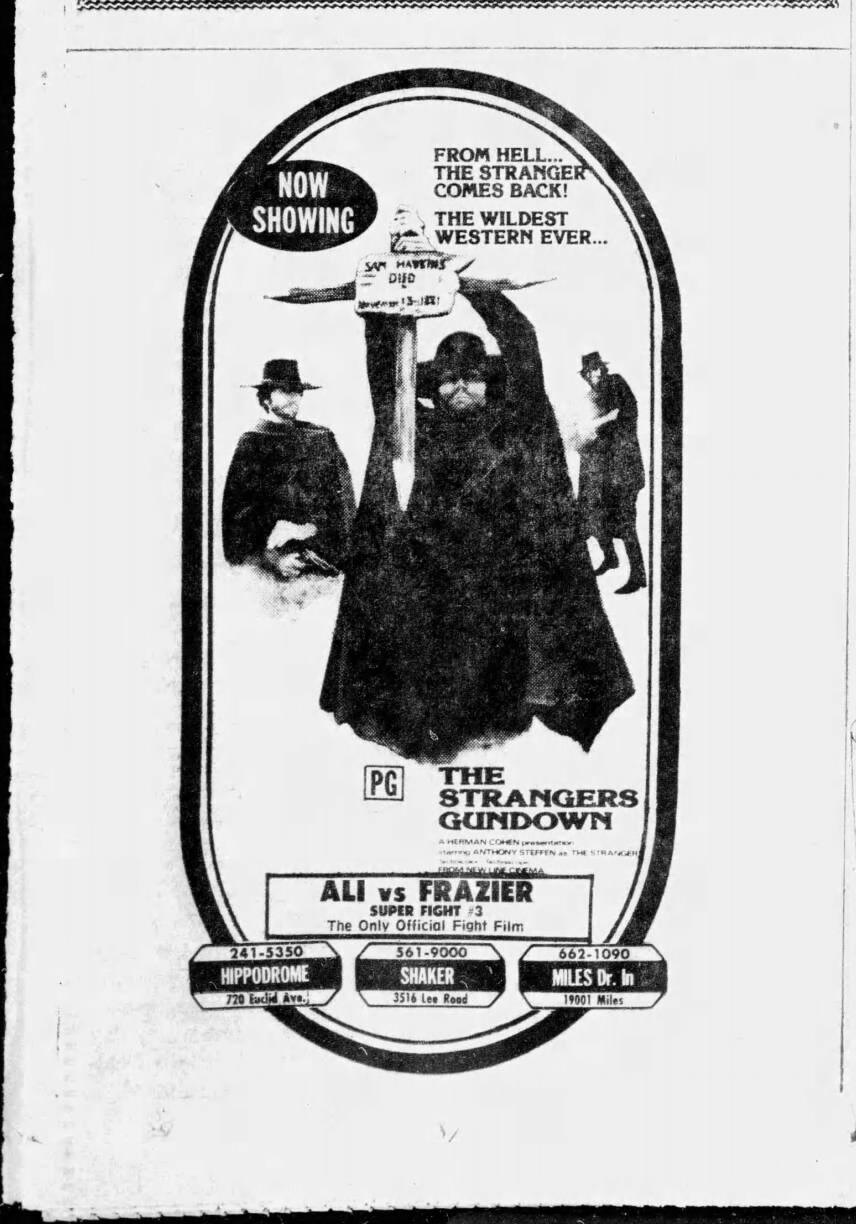
A great double feature with ‘Today We Kill… Tomorrow We Die!’ (Detroit Free Press, April 10, 1974) and 18 months later screened with the ‘Thrilla in Manila’ (Ali-Frazier III), (Plain Dealer, Cleveland, Ohio, October 8, 1975).
2 Likes
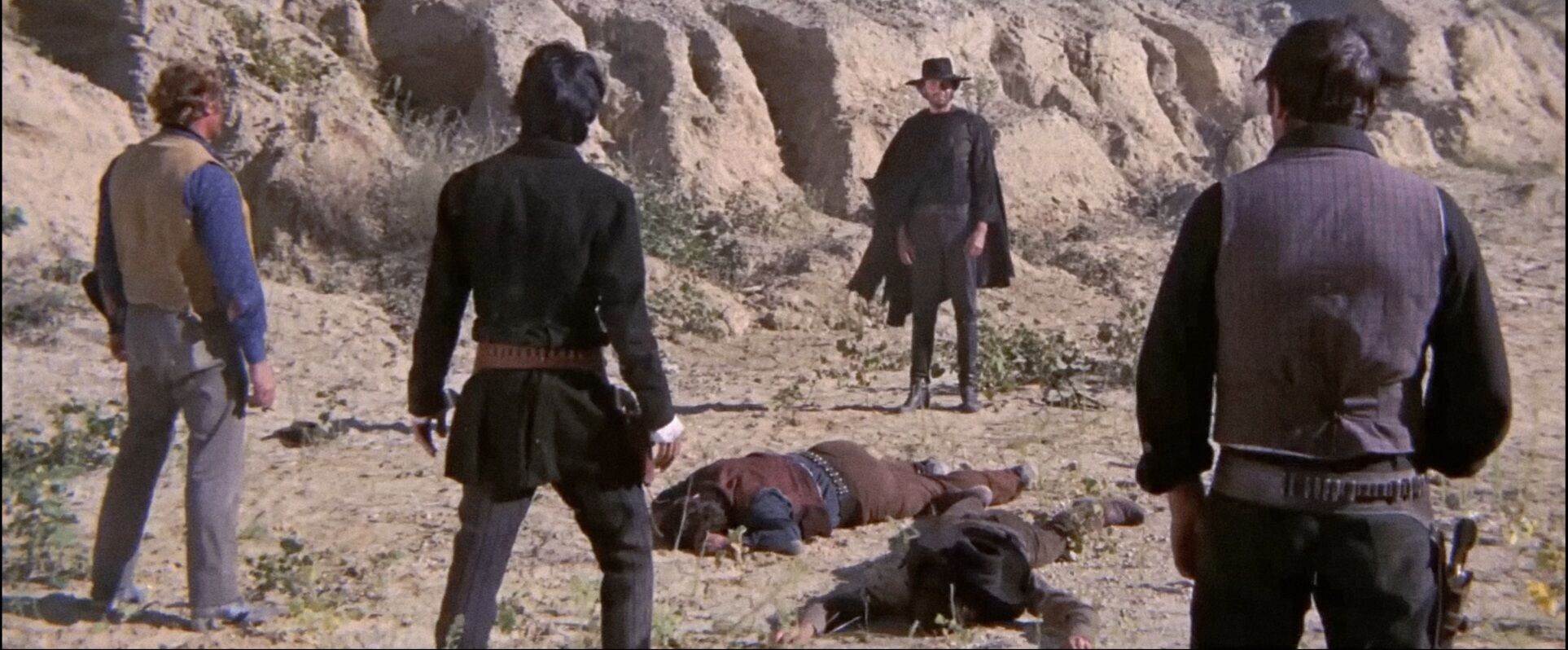
Gave this a watch after a few recent recommendations.
- Steffan’s so baby-faced and soft-haired in this that it’s hard to reconcile his appearance with the way characters react to him.
- …though it kind of grew on me when you see the flashback and he’s this naive, doe-eyed young soldier; and who you see in the film tracks as someone who still feels connected to that.
- The petulant sadist of the brother was an excellent villain you love to hate.
- A lot of the visuals were absolute aces, especially when the shot-down gunmen were sent back, strapped to crosses, upon their horses’ backs (the lead would’ve been a lot less mysterious had they shown him going through all the effort to rig that up.

- I about lost it when Steffan started pulling himself up that rope around his neck. For a second, I thought he was gonna climb the whole thing, until he went for his knife. The way the sudden slack from cutting the rope led to the brother’s peril was a chef’s kiss of an on-screen death.
- However, I’m not sure how there’s any ambiguity (as early comments in this thread seem to indicate) around his not being supernatural, even after he’s been shot and bleeding?
Overall, quite enjoyed it.
2 Likes
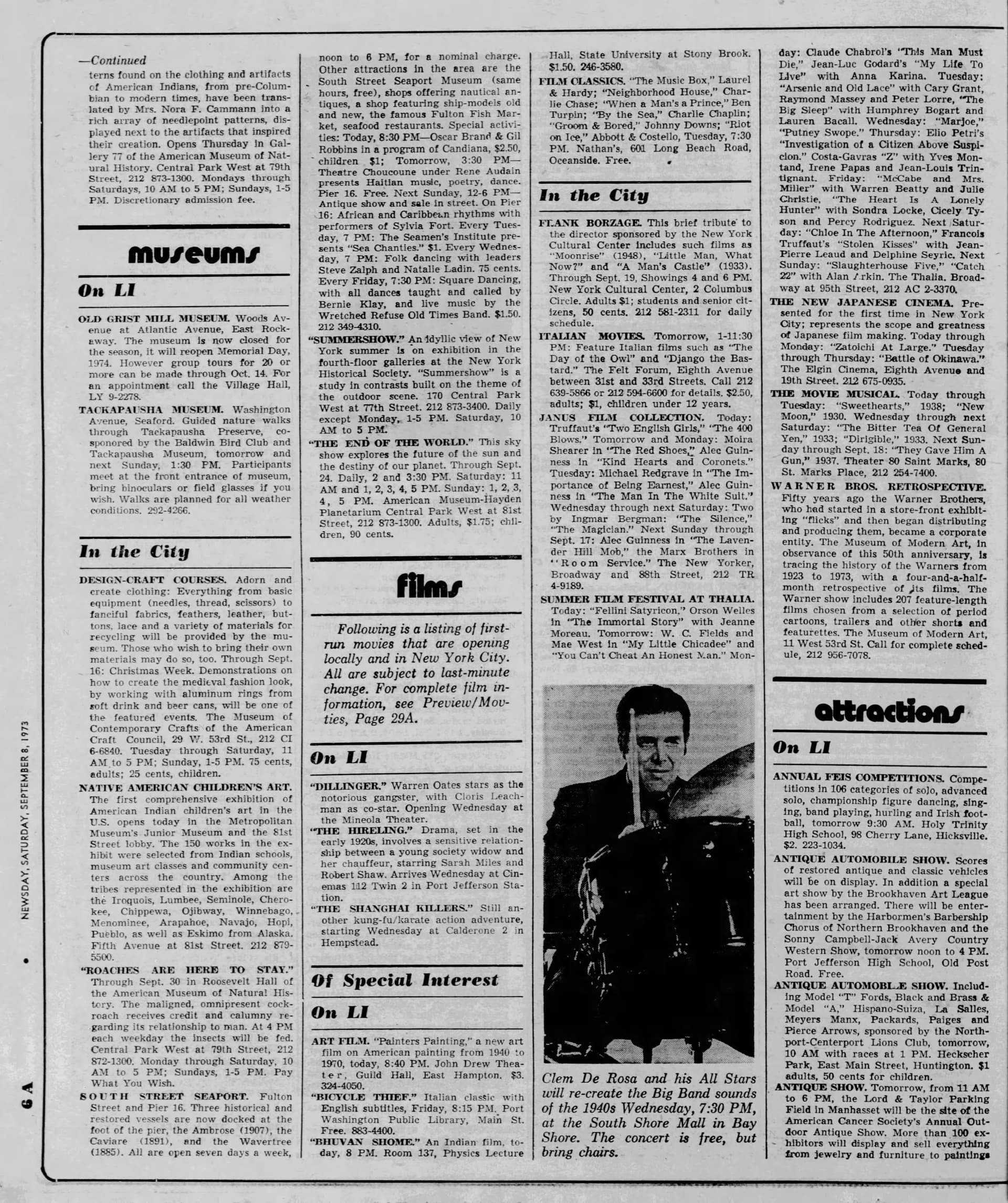
‘Django the Bastard’ was screened at the Felt Forum, 8th Avenue, NYC on September 9 1973 (listed below under Italian movies) more than six months before Herman Cohen’s edited ‘The Stranger’s Gundown’ opened in Detroit (April 1974). This was probably the same print that played in Dublin from early October 1973.
4 Likes
Seems pretty unlikely this influenced High Plains Drifter if its first USA showing was in September 1973. High Plains Drifter was released in April 1973 and filmed in July-August 1972. Ernest Tidyman (not Eastwood, since Tidyman wrote the script) would have had to have seen it in Italy in 1969.
3 Likes
I respectfully disagree, I think it was a big influence on High Plains Drifter. Eastwood knew exactly what was being successfully released in Italy and Europe, and it would not have been in the least bit difficult for him or Universal to source an English dubbed print to view. Also, remember that Joe Kidd was influenced by The Big Silence and Magnum Force by Execution Squad. Eastwood had intended to remake The Big Silence, but it did not happen. Instead, elements of the film ended up in Joe Kidd.
1 Like
Sorry - but I disagree totally.
Ernest Tidyman wrote High Plains Drifter not Eastwood. Tidyman said his script was based originally on an incident in 1964 the real-life murder of Kitty Genovese in which eyewitnesses reportedly stood by and watched. Django the Bastard didn’t even do that well in Italy - only L430m odd in the first run box office. Eastwood and Tidyman have never made any reference to Django the Bastard in commenting on the film.
I’ve seen Joe Kidd about 3 times and I fail to see any resemblance between it and The Great Silence.
The whole story about Eastwood remaking The Great Silence was speculation concocted by Alex Cox who thinks Eastwood saw it in 1967 when it hadn’t even been made. Cox is terrible on chronology- he says (p192) he had a conversation with the distributor of The Great Silence in 1973 who told him Fox was planning a remake with Eastwood (all hearsay) and then Cox contradicts himself by suggesting the ‘remake’ was Joe Kidd, released in 1972 a year earlier. He says Joe Kidd a ‘similar looking snowbound western’ that Eastwood did instead. So what Cox says doesn’t make sense. Joe Kidd is not a ‘snowbound’ western either as Cox claims and the Mauser automatic is carried by Don Stroud’s character not Eastwood’s ( Eastwood takes it off him when he kills Stroud I think but Clint hardly uses it). Cox then goes on to claim that because Joe Kidd was a ‘flop’ (which it wasn’t either reasonable $5.7m take) ‘this may have increased the pressure within the studio to suppress Corbucci’s film. What? Suppress an obscure 5 year old Italian box-office flop? All nonsense and inconsistent with the facts.
3 Likes
Credits page has been added…
1 Like
Very interesting information ! L430m seems to be a good run for a Steffen movie in 1969. Interviews said, that he had his most fans in Turkey and the Philippines. And this movie was really cheap produced. In this year the Italian audience started to lose their interest in SW movies (the international demand was still high). So the italian income seems to be more than average for this kind of flick, I guess.
But a influence on Eastwood is very hard to believe.
But my informations are just read from the mind.
2 Likes
Steffen’s 3 films released in 1969 (No Room to Die - L493m, Django the Bastard - L431m and Garringo - L460m ) all did better at the box office than his 5 1968 released films and all got a similar kind of gross of at the first run box-office, the highest being No Room to Die which made no 90 in the 1968/69 Italian box-office. But its not a standout - Django the Bastard was ranked 14 out of 28 Italian-backed westerns released in Italy in 1969.
Steffen’s top box-office year was 1966 when all four of his films took more than L600m at the first-run box-office (Seven Dollars on the Red, Ringo Mark of Vengeance, Few Dollars for Django and Blood at Sundown). Seven Dollars on the Red was his most successful movie in Italy.
In 1970, Steffen’s 4 western releases tended to get about L100m lower than his 1969 releases and were averaging the mid L300s.
3 Likes
Very good to know, Thank you for your Information. I haven’t any idea of the incomes of his movies for Italy. I only guessed that over L400m wasn’t such a box-office flop for this year (especially for a second line actor like Steffen; Sergio Martino said he was the first of the second line  ). I have read that the production of SWs decreased from 1968 to 1969 rapidly, in cause of the sinking interest of the audience. So I supposed the income of this one was already fine.
1867 & 1968 was the peak years - the box office spreadsheet shows 68 Italian-backed westerns released in both 1967 and 1968. That was unsustainable - probably also 10-15 or so American westerns released as well meaning about 2 westerns out per week in cinemas. The box-office of a lot of these films was not great due to the saturation.
1969 was the ‘crash’ when the number dropped to 28 which probably explains why Steffen’s average box office went up - as there were less competing western movies.
1970 was 33 and then 1971 jumped to 42 and 1971 was 36 probably kicked up due to the trinity movies but the grosses of the bottom half were very low, worse if inflation adjusted.
I only have 18 for 1973 and hardly any thereafter.
Italian inflation was bad from about 1972 onwards so that Keoma’s 1.5bnL in 1976 was probably only worth about L750m in 1966 money. So, these ‘twilight’ spaghettis were not the hits of the 1960s spaghettis. Inflation adjusted California and Silver Saddle were Gemma’s worst performing westerns at the Italian box-office.
1 Like
I did some inflation adjusted calculations for SWs some years ago, by using the income and average ticket prices to calculate possible admissions.
Examples:
Seven Dollars on the Red (1966): 840 mio Lira - 3.373 mio tickets sold
Django the Bastard (1969): 430 - 1.294
Keoma (1976): 1.572 - 3.352
So within 10 years Keoma made twice as much money with roughly the same amount of sold tickets.
1 Like
Yes - but if you inflate the actual cash (or discount the cash for Keoma back to 1966) Seven Dollars on the Red probably had a similar if not slightly higher taking to Keoma.
Per www.hitparadeitalia.it Seven Dollars on the Red ranked 33 in the 1965/66 Italian box office vs 41 for Keoma in 1976/77.
The two twilight Gemma movies ranked only 68 and 81 in 1977/78 whereas Gemma’s previous western worst was Ben and Charlie at 38 in 1971/72.
In 1966/67 - over 25 Italian westerns were in the top 100.
There is a pretty strong correlation between these rankings and inflation-adjusted takings. You could hit no 100 in the mid 1960s with around L500m but by the mid 1970s you needed about L1bn.
1 Like