Louise (Amy Adams) is a linguistics expert. She had a daughter who died in her teenage years from a rare form of cancer. Her husband left her some time before their daughter died.
While giving a linguistics class at her local university, news reports begin to flood in from all over the globe of alien spaceships - twelve in all - landing in different locations around the planet. What do they want? The US military enlist Louise’s assistance in finding that out, and they need to find out fast; other nations have their linguists working that question too, and some of them don’t appear too keen on the answer they think they’re getting…
Hm. Not a bad picture by any means; a very well-made one, certainly. I just… I dunno, I was maybe hoping for more. Of what? I don’t know that, either. Maybe I was hoping for hard sci-fi and got a movie about language instead. A good movie about language for sure, but, still.
Ah well. Heh, it already seems antiquated to see the US frantically seeking the peaceful, dialogue-driven solution to a crisis. Donald Drumpf would’ve just grabbed the Aliens by their heptapussies before building a wall around them (and making them pay for it). Pray for Sweden.
A movie about double infiltration: Tony Leung is a policeman who has infiltrated the mob, Andy Lau is a gangster who has infiltrated the police force. They are aware of each others’ existence, but don’t know each others’ identity. If it’s sounds familiar: Martin Scorscece used the idea for his so-called re-imagining The Departed, starring Leonardo Di Caprio and Mark Damon. I had not seen either of the two movies in quite a while, so I can’t say for sure which version I prefer. I think this one, but again, I’m not sure.
For a Hong Kong crime thriller, Infernal Affairs is remarkable restrained: there are several edge-of-your-seat sequences, but no hyperkenetic shootouts in the style of John Woo; the movie rather focusses on the inner life of the two moles; in the end it feels more like a philosphical examination of notions like loyalty and identity: if no one knows I’m not the man I pretend to be, who am I ? For both the unnatural situation has lasted so long that their unnatural behaviour has become a second nature. They both feel trapped: the temporary undercover job threatens to become an everlasting inferno …
Infernal Affair is fast-paced, with a tortuous and swift narrative that requires viewers’ full attention; performances are excellent and the cinematography and editing are nothing short of staggering. But … it also feels a bit cold; the characters are not one-dimensional, but the characterizations will give you the idea that they were written in short-hand. The directors, Adrew Lau and Alan Mak, seemed to have realized this: they made two more movies, called Infernal Affairs II & III (a prequel and and a flashback dominated sequel), in which they tried to give more depth to both the story and the characters
Saw it not too long ago. It was alright, I guess. I wasn’t totally absorbed in it but I wasn’t bored either. Can’t say I will go out of my way to watch the other two parts though.
When I first watched this movie, I also watched the sequels (or whatever) and wasn’t too fond of them: okay, but not as good as this one (and like you say: this one’s good but not exceptional either)
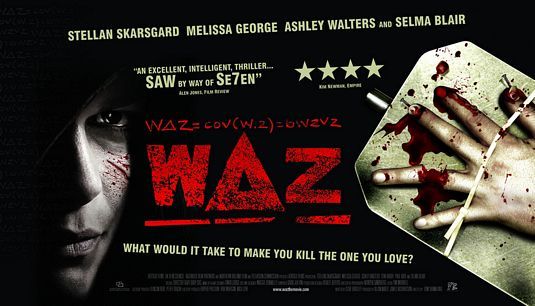
A British suspense shocker (set in the US, in a city that is never mentioned but seems to be New York), often called an answer to David Fincher’s Se7en (note the similar irregularities in the title, one film inserting a Greek letter, the other inserting a number). Fincher’s movie may be the more stylish and sophisticated one, but this one definitely has the more intelligent script; it could in fact be labeled as 'a thinking man’s version’ of the serial killer type of movie.
The odd title refers to an equation (the Price theorem), a mathematical description of evolution and natural selection. In WΔZ the serial killer is convinced that love does not exist and that people’s behavior is ruled by the selfish gene on every possible level. In other words: it’s Richard Dawkins’ theory put to the test (in the US the movie was released as ‘The Killing Gene’).
Unlike most thrillers in this subgenre, the quest for the killer is of minor importance to the plot: we know very soon who is behind the gruesome executions and we also understand why she (yes, the killer is a woman) is performing her horrifying experiments. The real question is what really happened on that one particular day in the past: What does the detective on the case (Stellan Skarsgard) really know about the incident and what is his exact relationship with a young boy from the hood who was on the spot, but apparently did not take part in the ugly proceedings?
W Delta Z is not perfect, you’ll easily notice some plot holes (but the entire genre is plagued by them), but it’s gruesome, unsettling and makes you think. And above all: the characters are believable, even the killer.
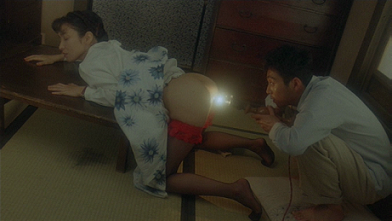
For a Japanese Nippon eroticism film, this wasn’t too bad. It’s based in 1923 Tokyo about a peeping landlord of a boarding house who roams the rafters and spies on the bizarre sexual encounters that take place beneath his roof. It’s a slow affair at times but the film is nicely shot with some outlandish images. Bizarre one, to say the least.
A ghost story similar to The Babadook (a babadookalike?) set in Iran towards the end of the Iran/Iraq war. An unexploded Iraqi bomb which crashes through a Tehran apartment block brings with it a malevolent spirit - a djinn - which attaches itself to a young girl and her mother who is determined not to flee the city, even as the bombs fall all around.
A good film this, with a towering central performance from Narges Rashidi as Shideh, the put-upon and somewhat westernised mother who resents the way of life she’s made to live. To be honest I found the “Women in Iran under the Ayatollah” angle of the movie considerably more interesting than the supernatural elements, but it’s all good. If you can catch it, I recommend it.
Strange but oddly compelling horror/thriller from South Korea. A nasty fungal disease and the arrival of a remote, solitary Japanese stranger appear to act as the catalysts for a spate of grisly and otherwise unexplainable murders being committed by the residents of the sleepy rural village of Gokseong upon one another, leaving the amiable but bungling village police officers well out of their depth. The movie shifts in tone constantly from light comedy to gory Seven-style police procedural to Asian horror, but it somehow does so without falling on its face. Two-and-a-half hours long but didn’t feel like it. The New York Times described The Wailing as “The hard stuff… Handle with care”. I don’t know if I’d go that far but it’s a good film, certainly, even if I’m not quite certain as to how it all panned out. I’ll be giving it another look very soon for sure.
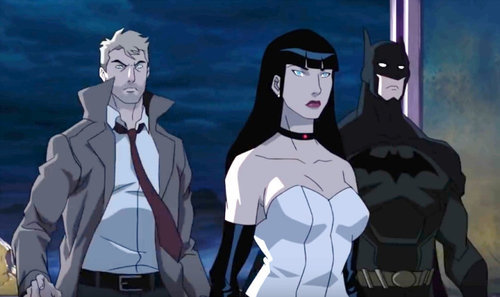
The latest picture in the “DC Universe Animated Original Movies” series sees most of the Justice League proper take a back seat to the “Dark” crew, placing Scouse occultist detective John Constantine and his former lover Zatanna Zatara front and center with able assistance from other Vertigo/DC crossovers including Swamp Thing, Black Orchid, Deadman and Etrigan the Demon in a battle against the villainous sorcerer Destiny (voiced by Alfred Molina) who has been making innocent people across the United States hallucinate, causing them to kill other innocent people in the belief that they are demonic monsters.
Pretty good entry into the DC Animated canon. Not great, but pretty good. It’s good to see some interesting new faces, anyway. I’m not sure about Welshman Matt Ryan’s Liverpudlian accent in voicing John Constantine, but fans of the character seem to quite like him (he also played the character in the short-lived live-action TV show Constantine and has made an appearance in the Arrowverse, too). If you don’t already watch these animated movies there’s nothing here likely to entice you to try them for the first time but if you DO like to dip into the DCUAOM from time to time it’s worth checking out.
Same here. I watched this on Friday night, having bought - and enjoyed - three animated ‘Batman’ films over the Christmas period.
To be honest, I’m really just a beginner when it comes to viewing these animated DC adventures.
In all honesty, I found the character of John Constantine to be particularly annoying. For certain, I’m not a prude when it comes to language, but Constantine’s character really began to grate, after a while.
I don’t know how much of this irritation was purely down to the voice artiste, and script-writer; or how much is simply a part of the long-established character. As I said, I’m just a beginner, when it comes to exploring the ‘Undiscovered Country’ of these characters, and the animated adventures.
The one animated adventure that I’d really like to see, is ‘The Killing Joke’…one which is on my ‘hit list’ to buy. Looking back, I’m kicking myself that I didn’t buy the box-set, with ‘Joker’ model included, a few months back…
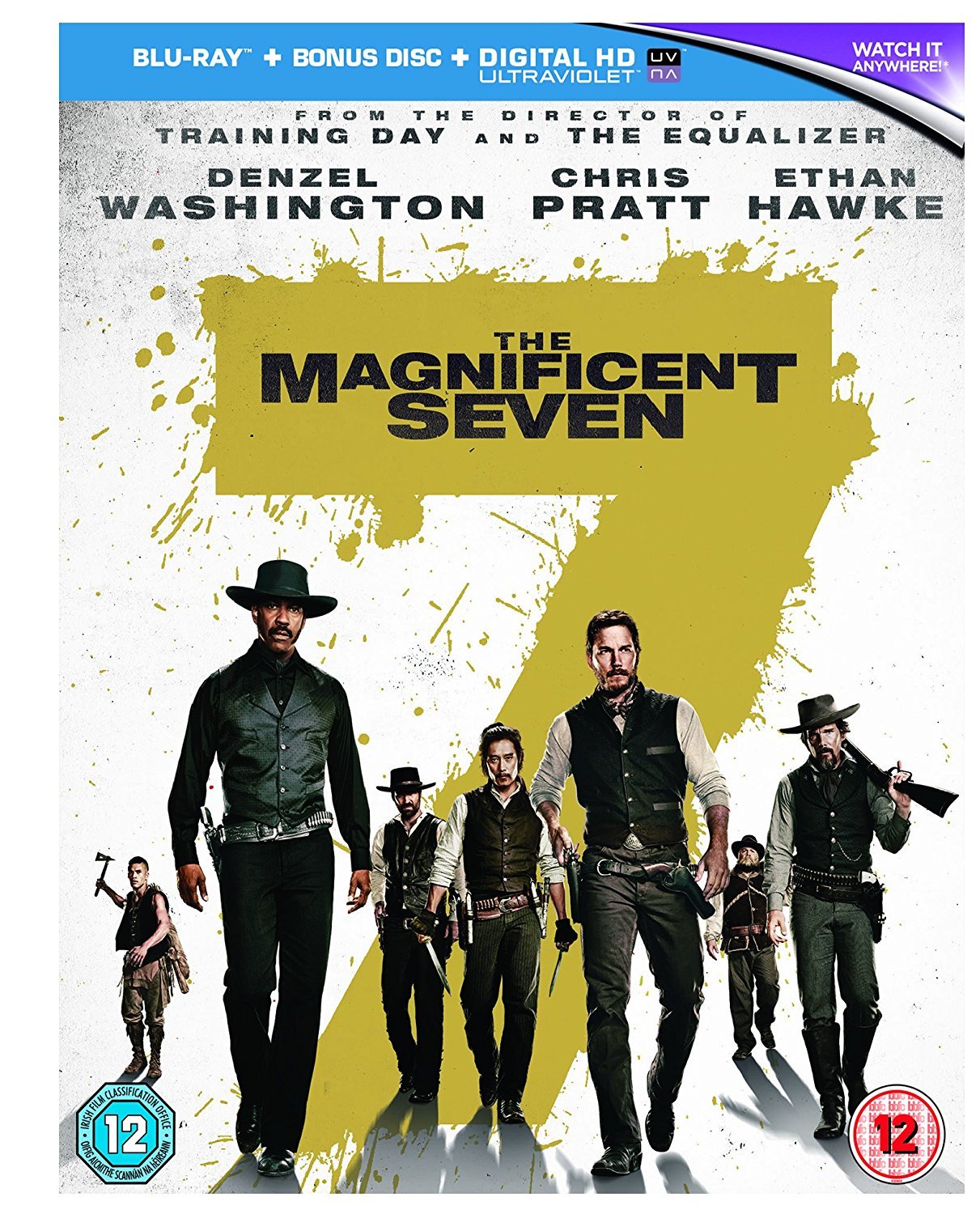
Being a fan of the original 1960 classic, ‘Mag. Seven’, I approached this re-make with trepidation, over the week-end.
In all honesty, I enjoyed it. Great scenery, a wonderful score by the late, great James Horner, and memorable performances from the main actors, whom you could tell (at least from the ‘extras’ included on the disc), were having a ball making the film. The inclusion of the original Elmer Bernstein ‘Magnificent Seven’ theme, during the end credits, was a very welcome bonus…
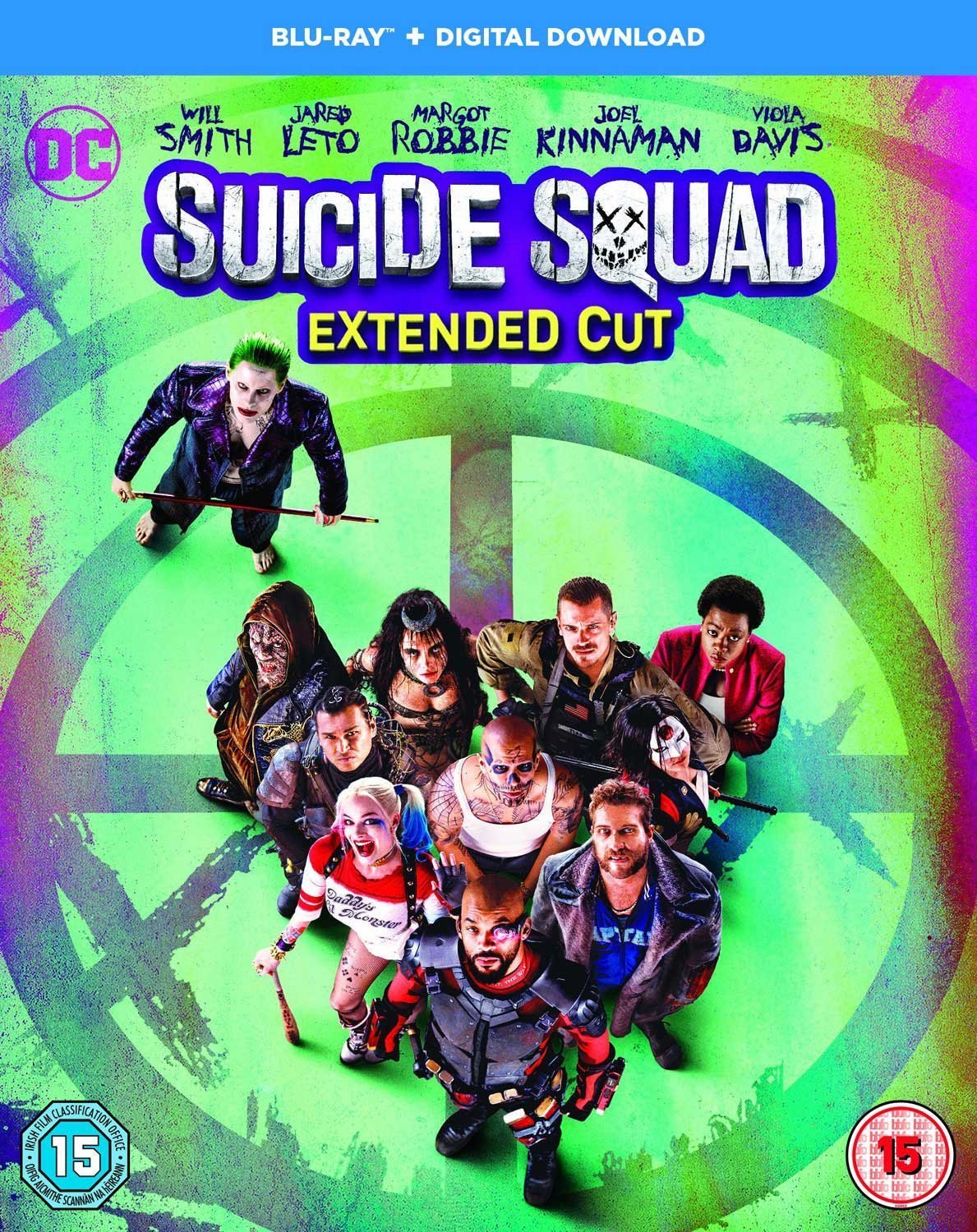
Watched this on Saturday night, not knowing a great deal about the original comic/graphic novels.
Yet again, as with the ‘Mag. Seven’, I greatly enjoyed this film. The stand-out for me, was the character of ‘Harley Quinn’, played to perfection by Margot Robbie, although the rest of the team were also pretty memorable.
As for the ‘Joker’ character, played by Jared Leto…I thought he did a grand job, and brought a whole new dimension to the previous incarnations of the maniac we love to hate…
The Killing Joke is not bad, but it’s not as good as it maybe should’ve been and, as such, is generally considered a fairly crushing disappointment. See, The Killing Joke is a revered standalone graphic novel, an origin tale for The Joker written by the hugely influential Alan Moore. It’s a bit short, though. So DC front-loaded the story for the animated movie with some crappy plot involving a mobster’s nephew (named “Paris Franz”!) obsessively stalking Batgirl/Barbara Gordon, who engages in a fully costumed sex scene with Batman/Bruce Wayne. It’s all completely unnecessary. Once the movie starts to tell The Killing Joke storyline properly it does so very well imho (although the animation doesn’t compare to the magnificent Brian Bolland artwork of the graphic novel) but a lot of damage has been done by then. If you ever get to seeing it, try to look at it as two movies: A poor half-hour support picture, followed by a really good hour-long main feature. It’s certainly nice to hear Kevin Conroy and Mark Hamill back as Batman and The Joker respectively, anyway.
If you haven’t seen them, these are my top ten recommendations (I know you’ve seen Batman: Return of the Caped Crusaders otherwise that would’ve been high on this list too):
-Batman: The Dark Knight Returns Part 1 (Oliva, 2012)
-Batman: The Dark Knight Returns Part 2 (Oliva, 2013)
-Batman: Gotham Knight (Various, 2008)
-Batman: Year One (Liu, 2011)
-Justice League: The Flashpoint Paradox (Oliva, 2013)
-Batman: Mask of the Phantasm (Radomski/Timm, 1993)
-Batman: Under the Red Hood (Vietti, 2010)
-Justice League: Gods and Monsters (Liu, 2015) (fantastic “alternative” take on the DC characters)
-Batman: Assault on Arkham (Spaulding/Oliva, 2014) (This is a far better Suicide Squad movie than Suicide Squad imho)
-Superman vs The Elite (Chang, 2012)
Regarding the animated list: I’ve already bought Batman: the Dark Knight Returns, pts 1&2, Batman: Assault on Arkham, and - of course - the excellent ‘Return of the Caped Crusaders’.
I will most certainly check out the other titles you’ve mentioned…
As for ‘The Killing Joke’, I’ll put that on hold, for now.
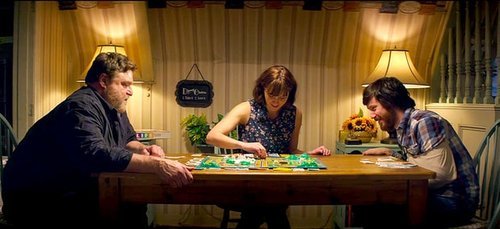
Michelle (Mary Elizabeth Winstead) is rendered unconscious in a car crash. She awakens locked in some sort of cell, her wounds treated. An enormous middle-aged man enters the room and informs her that, far from harming or killing her, he intends to keep her alive. His name’s Howard (John Goodman), he was in the US Navy, he’s a conspiracy theorist and a survivalist who found her in her wrecked car and it’s just as well really because… something has happened, some sort of attack on the United States, the air is lethally contaminated and the only reason they’re alive is because they’re tucked safe and sound in Howard’s bomb shelter, several feet under his farmstead. They can’t leave the bunker for a while - years, maybe - and everyone Michelle has ever known or loved is probably dead but she should count herself lucky; Howard has saved her life.
Or has he?
How true is any of this? There’s another resident in the shelter, a younger man called Emmett (John Gallagher Jr). He corroborates Howard’s story about an unspecified large-scale assault but, then again, he’s known Howard for some time. He even helped Howard construct the bunker. How reliable is his story?
Playing out like an extended episode of The Twilight Zone, 10 Cloverfield Lane is nominally the follow up to Matt Reeves’ 2008 creature feature Cloverfield but it’s not a sequel in the traditional sense; in fact the comparison to Rod Serling’s anthology show holds up here too since the two films are connected in the same way episodes of The Twilight Zone are, not in any literal way but rather in terms of broad themes, mood et cetera. It’s not as good as its predecessor to me but then I’m a sucker for a big f*ck-off monster kicking a city to rubble. Still, the trio of characters in 10 Cloverfield Lane are more interesting than the poorly-drawn pack of nobodies in Cloverfield.
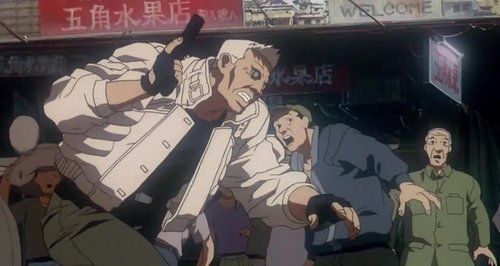
…Or, more accurately, Ghost in the Shell 2.0, which is not a sequel but a 2008 remastered version of the 1995 movie, offering upgraded animations on a few scenes and not much else (in fact the switch from 1995 2D cel shading to 2008 3D digital rendering and back again can be quite jarring at times).
It’s 2029 in the (fictional) Japanese city of New Port. Cybernetics has become so advanced and accessible that virtually every part of the human body can be replaced and/or augmented by a superior robotic simile, and almost everybody has at least some form of cybernetic enhancement. Major Motoko Kusanagi, a leading field operative for New Port’s “Section 9” public security division (a sort of cyberpunk FBI, if you like) has been enhanced with a complete state-of-the-art cyborg body - or “shell” - to such a degree that only her consciousness - or “ghost” - remains of her human form. Kusanagi and her team are on the trail of “The Puppet Master”, an incredibly dangerous cyber-terrorist who can hack into the augmented portions of peoples’ bodies and minds in order to force them to commit politically motivated atrocities such as assassinations and whatnot. But, the closer Kusanagi gets to The Puppet Master’s true identity, the further away he seems to get. One thing’s for sure, though: He’s after her, too.
I haven’t seen GitS for many years and, obviously enough, I’ve given it a run-out now in advance of the imminent live-action American remake starring Scarlett Johansson as The Major. I remember, before I’d ever seen it, being slightly intimidated; by anime in general - an intimidation which stayed with me for many more years - but more specifically by the movie’s reputation as a fairly inaccessible piece. It’s really not, though. In fact I don’t know if it’s because I’ve seen it a few times now or if it’s because I’ve seen a lot more anime in the last few years but, this time, I was struck by how relatively easy Ghost in the Shell is to follow. It’s keen on posing philosophical conundrums about the nature of what it is to be human, as so many sci-fi movies do, but its plot is quite straightforward. It’s only about 80 minutes long too, so if you’ve never taken the plunge, you should. It’s one of the finest films of its type. Hugely influential, too; you can see The Wachowski’s 1999 classic The Matrix in almost every scene.