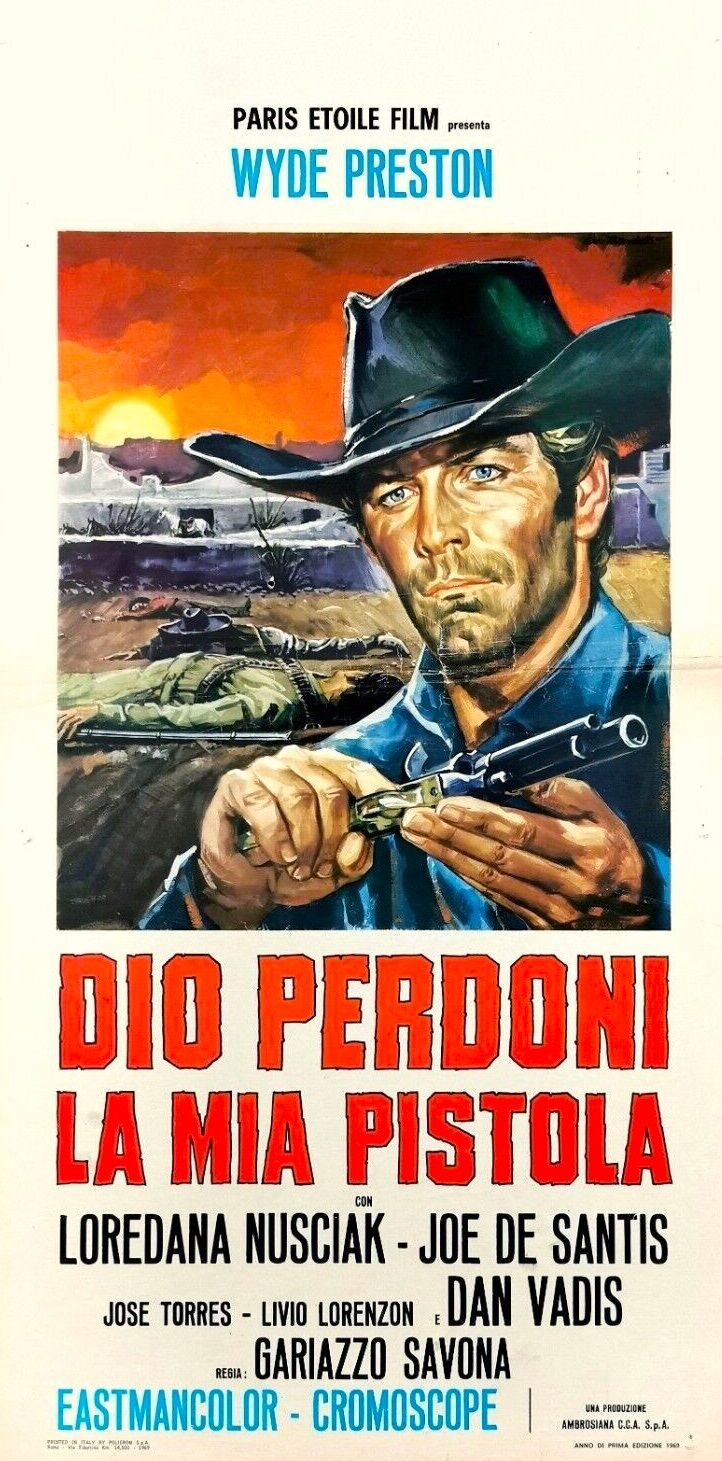
God Will Forgive My Pistol (1966-1969) (orig. Dio perdoni la mia pistola) - Directors: Mario Gariazzo, Leopoldo Savona - 2/10.
The movie basically boils down to the detective being tasked with clarifying the circumstances behind the death of a certain land owner whose property was later arrogated by his neighbor. Long story short, it is a project which was kicked off and terminated by Leopoldo Savona in 1966 and then in 1969, was finished off by Mario Gariazzo, who availed himself of some additional footage so as to patch this mess together. Production’s primary issue consists in that its storyline feels extremely underdeveloped and realistically could amount to about 50 minutes worth of running time at best, yet it is stretched out here to almost an hour and a half with Gariazzo padding out Savona’s leftovers with putatively amusing buffoonery so as to achieve full-feature length. The first half an hour comes out after a fashion with Preston’s character mindfully gleaning information, generally going through the motions, yet in a largely digestible fashion. Nonetheless, following the first half, the flick prolongs film’s duration way beyond its expiry time, ceaselessly protracting the trite story by means of the repetitious cat-and-mouse game between the villain and the protagonist, who resorts to employing chicanery in the form of disguise and concealed weapons in order to confuse or eliminate his adversaries. Needless to say, not only does the final outcome feel disjointed by reason of having been helmed by two directors on two different occasions, but also most situations in it simply verge on the absurd, sporadically appearing outright desultory. Other than those thousands of fans of spaghetti western composites, who crave for yet another choice morsel, few viewers will be able to get their kicks from this arrantly picayune dross.
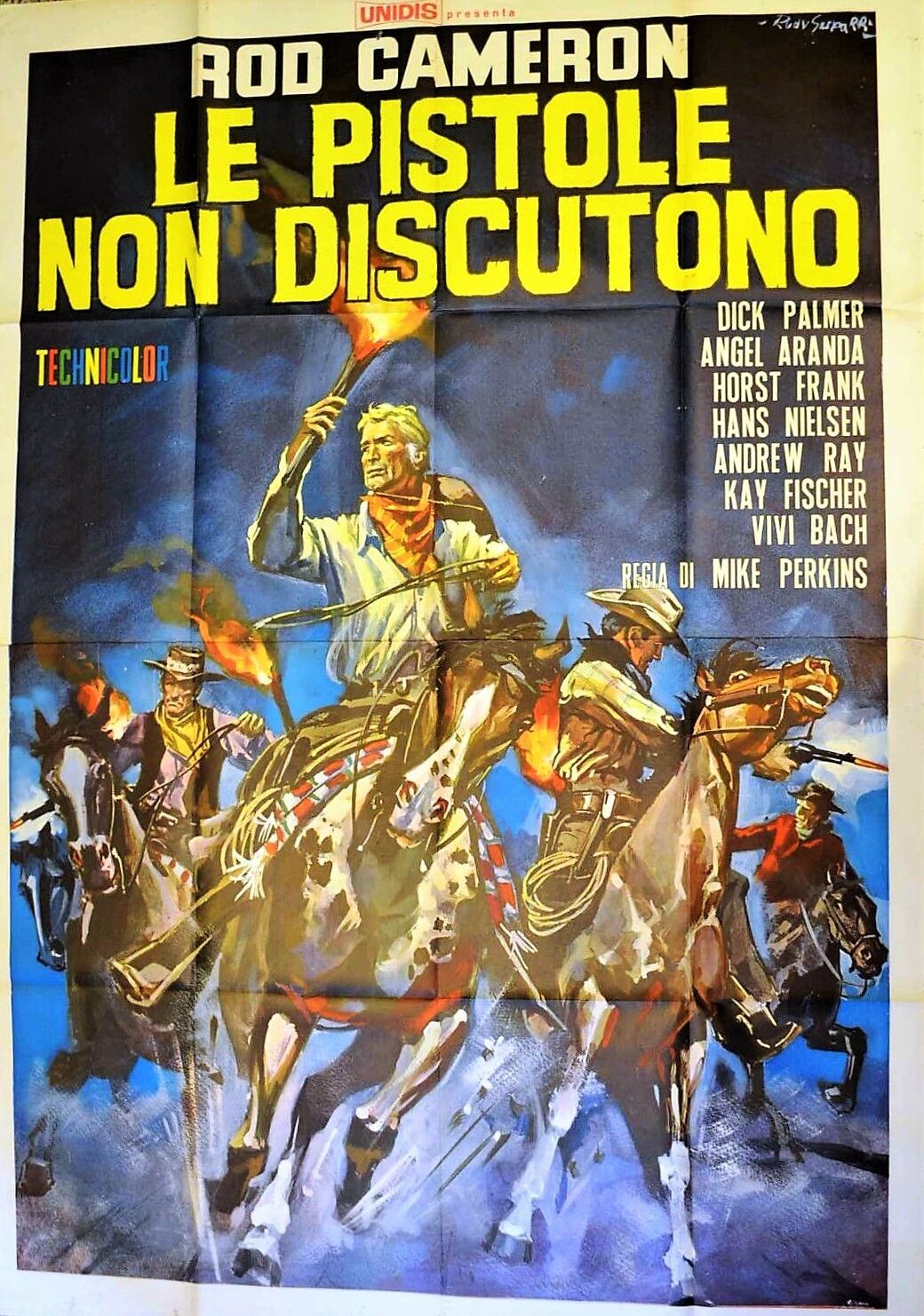
Bullets Don’t Argue (1964) (orig. Le pistole non discutono) - Director: Mario Caiano - 4/10.
Caiano’s handling of the material comes out “nice” in the way taking a sip of water while being fully hydrated is “nice”; in other words, though pic’s pacing, camerawork and production values are on the adequate side, the execution hardly ever stands out in any way, shape or form. Perhaps that would have been more condonable had the rest of the project turned out somewhat bolder in substance. Regrettably, the storyline here leaves a lot to be desired: it essentially comes down to the pair of brothers displaying divergent tendencies with Horst Frank’s character being the nihilistic, merciless outlaw who browbeats his younger brother into submission. The contention between the two was clearly devised as a springboard for the latter to redeem himself in film’s subsequent developments; the issue resides in that he refuses to join his brother in the path of crime not on some lofty moral grounds, considering his initial eagerness to become a criminal himself, but inasmuch as he merely recoils from violence and appears too squeamish to engage in a full-blown conflict with all of its corollaries. This is not exactly remedied by the fact that he scarcely comports himself with any dignity throughout, throwing temper tantrums and being reduced to tears on a pretty much regular basis. As a consequence of his ceaseless wimpishness, his redemption arc in the second half simply does not work and comes to look obtuse for the most part. The sheriff’s backstory about him being forced to work during his honeymoon, what with him having just entered into matrimony, does not meaningfully contribute to the plot which promptly begs the question why it was introduced to begin with. Other than Frank’s vigorous performance and Morricone’s gratifying score, there isn’t much to take pleasure in here.
-|–*–|-
For the rest of the month, I’m going to be primarily re-watching stuff; in the meantime, I’ve already revisited Challenge Of The McKennas and Vengeance Is Mine, my previous ratings and thoughts still stand for the most part.